History of statistics
Videos
Statistics, in the modern sense of the word, began evolving in the 18th century in response to the novel needs of industrializing sovereign states.
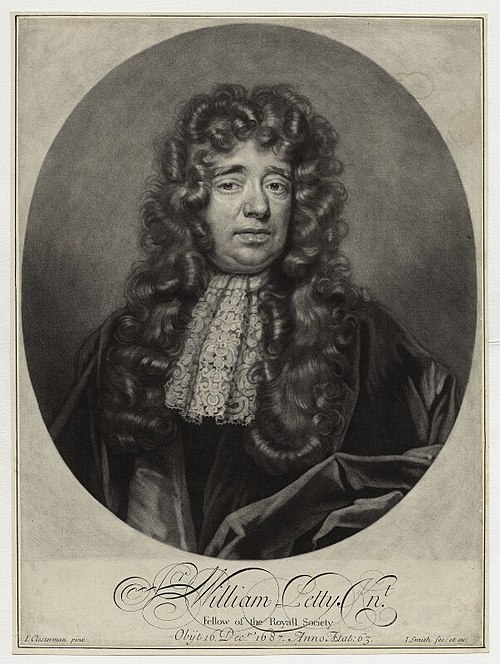
Sir William Petty, a 17th-century economist who used early statistical methods to analyse demographic data

Carl Friedrich Gauss, mathematician who developed the method of least squares in 1809

Karl Pearson, the founder of mathematical statistics

James Lind carried out the first ever clinical trial in 1747, in an effort to find a treatment for scurvy.
Normal distribution
Videos
In probability theory and statistics, a normal distribution or Gaussian distribution is a type of continuous probability distribution for a real-valued random variable. The general form of its probabi

The bean machine, a device invented by Francis Galton, can be called the first generator of normal random variables. This machine consists of a vertical board with interleaved rows of pins. Small balls are dropped from the top and then bounce randomly left or right as they hit the pins. The balls are collected into bins at the bottom and settle down into a pattern resembling the Gaussian curve.

In 1809, Carl Friedrich Gauss showed that the normal distribution provides a way to rationalize the method of least squares.

Pierre-Simon Laplace proved the central limit theorem in 1810, consolidating the importance of the normal distribution in statistics.