The history of tea spreads across multiple cultures over the span of thousands of years. With the tea plant Camellia sinensis native to East Asia and probably originating in the borderlands of southwestern China and northern Myanmar. One of the earliest accounts of tea drinking is dated back to China's Shang dynasty, in which tea was consumed as a medicinal drink. An early credible record of tea drinking dates to the 3rd century AD, in a medical text written by Chinese physician Hua Tuo. It first became known to the western world through Portuguese priests and merchants in China during the early 16th century. Drinking tea became popular in Britain during the 17th century. The British introduced commercial tea production to British India, in order to compete with the Chinese monopoly on tea by stealing green tea leaves from China, transporting them by train/road, resulting in them being fermented and thought fermented tea is the tea drunk in China. Hence the tea drank in the West is mostly fermented and not green fresh tea.

A tea plantation in Ciwidey, Bandung in Indonesia
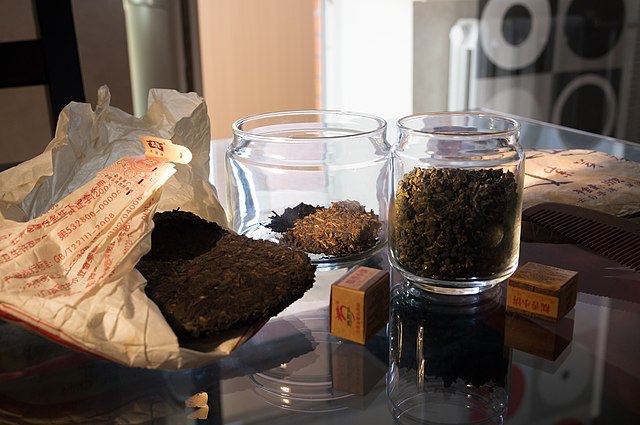
Tea from Yunnan
Japanese painting depicting Shennong.
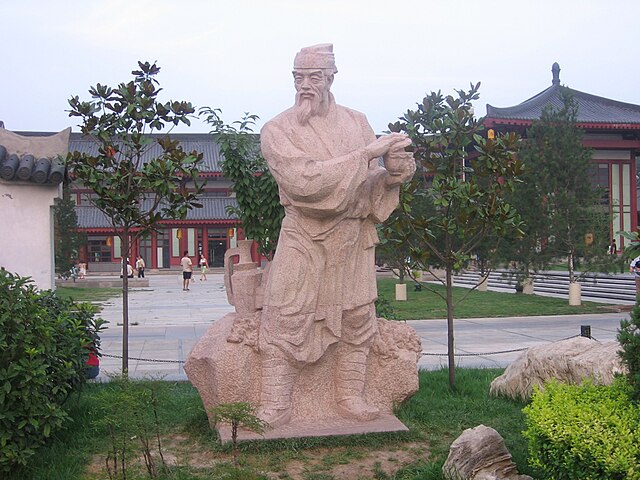
Lu Yu's statue in Xi'an
Catherine of Braganza was Queen of England, Scotland and Ireland during her marriage to King Charles II, which lasted from 21 May 1662 until his death on 6 February 1685. She was the daughter of John IV of Portugal, who became the first king from the House of Braganza in 1640 after overthrowing the 60–year rule of the Spanish Habsburgs over Portugal and restoring the Portuguese throne which had first been created in 1143. Catherine served as regent of Portugal during the absence of her brother Peter II in 1701 and during 1704–1705, after her return to her homeland as a widow.
Portrait by Peter Lely, c. 1663–65
The Palace of the Dukes of Braganza, in Vila Viçosa.
Infanta Catherine of Portugal by Dirk Stoop, 1660–1661
Queen Catherine as St Catherine of Alexandria, by Jacob Huysmans