History of theatre
Videos
The history of theatre charts the development of theatre over the past 2,500 years. While performance elements are present in every society, it is customary to acknowledge a distinction between theatr

Hannah Pritchard as Lady Macbeth and David Garrick as Macbeth at the Theatre Royal, Drury Lane in April 1768
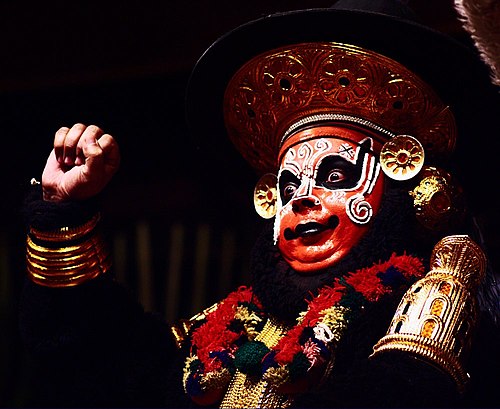
Performer playing Sugriva in the Koodiyattam form of Sanskrit theatre

Eduardo De Filippo as Pulcinella, a character from the Italian Commedia dell'arte

The best-preserved example of a classical Greek theatre, the Ancient Theatre of Epidaurus, has a circular orchêstra and probably gives the best idea of the original shape of the Athenian theatre, though it dates from the 4th century BC.
Drama
Videos
Drama is the specific mode of fiction represented in performance: a play, opera, mime, ballet, etc., performed in a theatre, or on radio or television. Considered as a genre of poetry in general, the
History of theatre
…understood as analogous to the theatre and increasingly came to absorb its dramatic vocabulary. The theatre of ancient Greece consisted of three types of drama: tragedy, comedy, and the satyr play. Athenian tragedy—the oldest surviving form of tragedy—is a type of dance-drama that formed an important part of…

Depiction of a scene from Shakespeare's play Richard III

Relief of a seated poet (Menander) with masks of New Comedy, 1st century BC – early 1st century AD, Princeton University Art Museum

An ivory statuette of a Roman actor of tragedy, 1st century AD

Stage drawing from a 15th-century vernacular morality play The Castle of Perseverance (as found in the Macro Manuscript)