History of wine
Videos
The earliest known traces of wine were found near Tbilisi, Georgia. The earliest known winery, from c. 4100 BCE, is the Areni-1 winery in Armenia. The subsequent spread of wine culture around the Medi

Hellenistic mosaics discovered close to the city of Paphos depicting Dionysos, god of wine
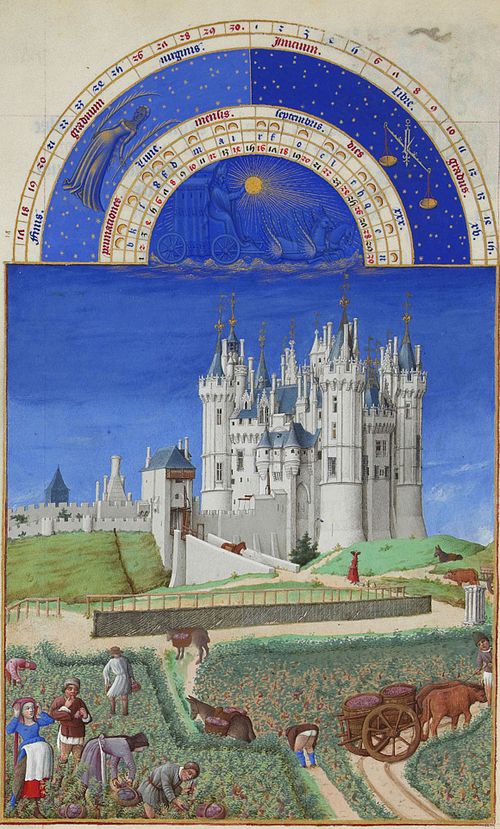
Grape harvesting at Château de Saumur, depicted in Les Très Riches Heures du duc de Berry (c. 1416)

Georgian Kvevri, a jar dated to the 6th millennium BC found at the Shulaveri site (Georgian National Museum).

Entrance to the Areni-1 cave in southern Armenia near the town of Areni where a winery dated to c. 4100 BC was found in 2007.
Phoenicians and wine
Videos
The culture of the ancient Phoenicians was one of the first to have had a significant effect on the history of wine. Phoenicia was a civilization centered in current day Lebanon. Between 1550 BC and 3
History of wine
…c. 4100 BCE, is the Areni-1 winery in Armenia. The subsequent spread of wine culture around the Mediterranean was probably due to the influence of the Phoenicians (from c. 1000 BCE) and Greeks (from c. 600 BCE). The Phoenicians exported the wines of Byblos, which were known for their quality into Roman times…

The Phoenicians transported wine across the Mediterranean in amphorae, vessels once also known as the "Canaanite jar."

Ampelographers theorize that the Vitis vinifera pontica vine spread by the Phoenicians across the Mediterranean was an ancestor vine to many of the world's most widely planted white grape varieties.

A Punic stele from Carthage, with a carving of grapevines