Holkham Hall
Videos
Holkham Hall is an 18th-century country house near the village of Holkham, Norfolk, England, constructed in the Neo-Palladian style for Thomas Coke, 1st Earl of Leicester. The hall was designed by the

Holkham Hall. The severely Palladian south facade with its Ionic portico is devoid of arms or motif; not even a blind window is allowed to break the void between the windows and roof-line, while the lower windows are mere piercings in the stark brickwork. The only hint of ornamentation is from the two terminating Venetian windows.

Holkham Hall. Top right: One of the four identical secondary wings

The north front showing, left and right, the single-bay wings which link the main block to the northern pavilions

The Marble Hall
Earl of Leicester
Videos
Earl of Leicester is a title that has been created seven times. The first title was granted during the 12th century in the Peerage of England. The current title is in the Peerage of the United Kingdom
Holkham Hall
…in the reigns of Elizabeth I and James I and VI and the founder of his family's fortune. It remains the ancestral home of the Coke family, who became Earls of Leicester. The house is a Grade I listed building, and its park is listed, also at Grade I, on the Register of Historic Parks and Gardens of Special Historic…
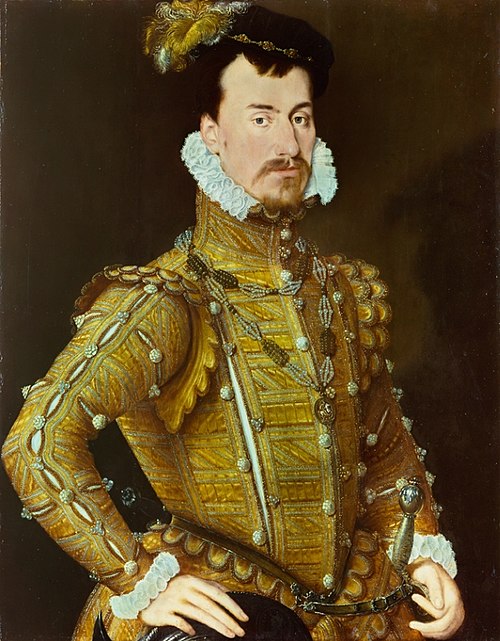
Robert Dudley, created Earl of Leicester in 1564.

Holkham Hall