Vice-Admiral of the White Horatio Nelson, 1st Viscount Nelson, 1st Duke of Bronte was a British Royal Navy officer whose leadership, grasp of strategy, and unconventional tactics led to multiple decis
Portrait of Horatio Nelson by Lemuel Francis Abbott, 1799


The site of the rectory in Burnham Thorpe in Norfolk, where Nelson was born in 1758
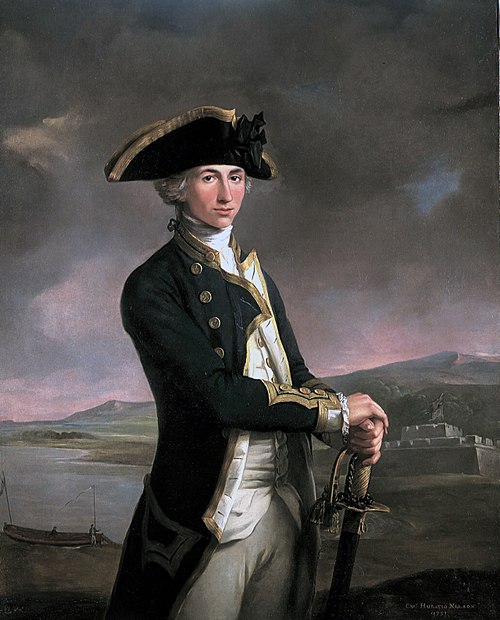
Captain Horatio Nelson, painted by John Francis Rigaud in 1781, with Fort San Juan—the scene of his most notable achievement till then—in the background.

Nelson's wife, Lady Nelson, formerly Frances "Fanny" Nisbet of the island of Nevis, West Indies.
Emma, Lady Hamilton
Videos
Emma, Lady Hamilton, was an English courtesan, remembered as the mistress of naval hero Lord Nelson and the muse of artist George Romney.
Horatio Nelson, 1st Viscount Nelson
…by the British ambassador to the kingdom, William Hamilton. During the negotiations for reinforcements, Nelson was introduced to Hamilton's new wife Emma Hamilton. The negotiations were successful, and 2,000 sailors and several ships were mustered by mid-September. Nelson put to sea in pursuit of a French frigate…

Portrait as a girl (aged seventeen) by George Romney, c. 1782

Emma as Circe, by George Romney, 1782

Charles Greville by George Romney c. 1781

Portrait by George Romney, c. 1785