The House of Representatives is the lower house of the National Diet of Japan. The House of Councillors is the upper house. The composition of the House is established by Article 41 and Article 42 of

Chamber of the House of Representatives of Japan

Kuroda Kiyotaka, Satsuma samurai and prime minister in the late 1880s, coined the term "transcendentalism" (超然主義, chōzen shugi) on the occasion of the promulgation of the Meiji Constitution in 1889. The oligarchs should try to "transcend" electoral politics and govern without partisan majorities the House of Representatives.
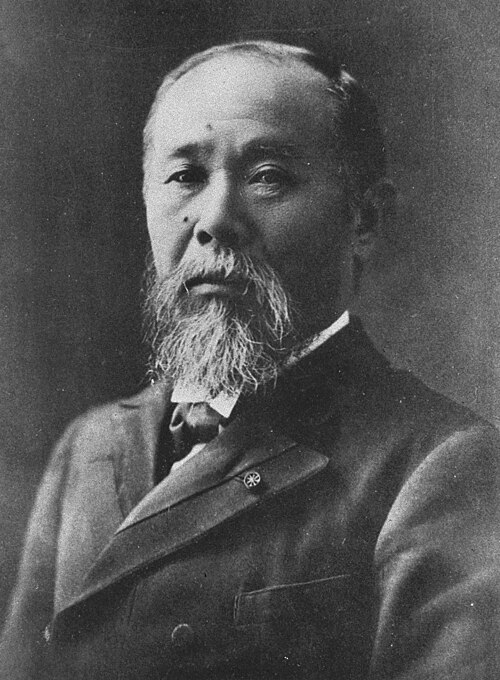
Itō Hirobumi, a Chōshū samurai, member of the House of Peers and prime minister of Japan on three non-consecutive occasions between 1885 and 1901. He was a main architect of the Imperial Constitution which created the Imperial Diet. When the oligarchs attempts to govern "transcendentally" mostly failed in the 1890s, he saw the necessity for permanent allies among elected political parties.

Hara Takashi, although born a Morioka noble, made his career as commoner-politician and became the first and one of only three prime ministers from the House of Representatives in the Empire.
Japanese Communist Party
Videos
The Japanese Communist Party is a major political party in Japan. Founded in 1922, it is the oldest active political party in the country. It had 250,000 members as of January 2024, making it one of t
House of Representatives (Japan)
…groups Government (Second Takaichi cabinet) (316) LDP (316) Supported by (36) JIP (36) Opposition (106) CRA (48) DPFP (28) Sanseitō (15) Team Mirai (11) JCP (4) Unaffiliated (7) Independent (7) Committees 17 committees Length of term Up to 4 years Salary Speaker: ¥2,170,000/m Vice Speaker: ¥1,584,000/m…

Prominent wartime JCP members from left to right: Kyuichi Tokuda, Sanzō Nosaka and Yoshio Shiga, c. 1945–1946

Shōichi Kasuga

Ritsu Ito

Release of Japanese Communist Party members from prison, 1945