Houses of Refuge in Florida
Videos
The Houses of Refuge in Florida were a series of stations operated by the United States Life Saving Service along the coast of Florida to rescue and shelter ship-wrecked sailors. Five houses were constructed on the east coast in 1876, with five more added in 1885 and 1886. There were also two life-saving stations built, one just south of the Jupiter Inlet, the other on the Gulf coast on Santa Rosa Island near Pensacola, Florida. A house of refuge was planned for the Marquesas Keys, but was never put into commission. The houses were staffed by civilian contractors who lived in the houses with their families. Most of these houses remained in service as life-saving stations until 1915 or later. Some of the locations became United States Coast Guard stations after the Life-Saving Service was merged with the United States Revenue Cutter Service to form the Coast Guard in 1915.

The Biscayne House of Refuge was typical of the houses of refuge in Florida.

Built on the southern tip of Hutchison Island in 1876, Gilbert's Bar House of Refuge No. 2 is the last remaining of the refuges commissioned for the U.S. Life-Saving Service.

The Biscayne House of Refuge between 1915, when it became a United States Coast Guard station, and 1926, when it was badly damaged in the Great Miami Hurricane. The dormer was probably added after 1915. The original attic only had windows at the gable ends.

The Santa Rosa Life-Saving Station in 1906
Delray Beach, Florida
Videos
Delray Beach is a city in Palm Beach County, Florida, United States. The population of Delray Beach as of April 1, 2020 was 66,846 according to the 2020 United States Census. Located in the Miami metropolitan area, Delray Beach is 52 miles north of Miami.

Seal
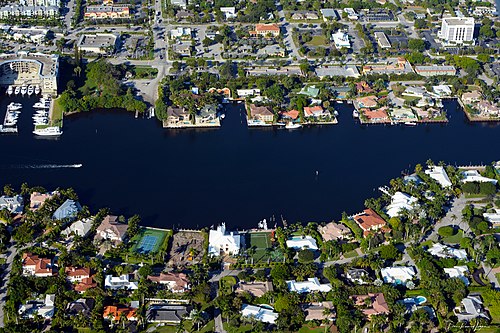
Image: Delray Beach Florida 900 block Seagate photo D Ramey Logan alt

Image: Morikami Lake House

Image: Delray Beach Intracoastal Waterway