Howland Island
Videos
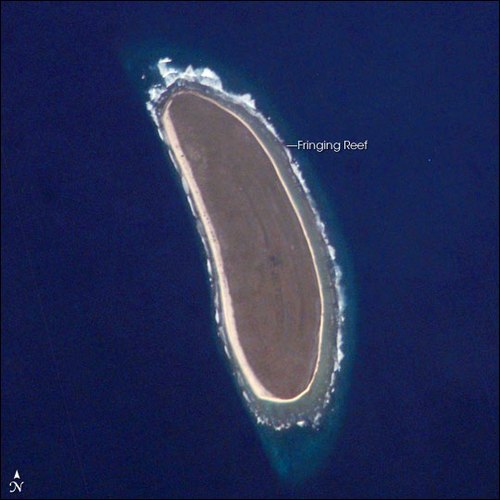
Howland Island is an uninhabited coral island and strict nature reserve located just north of the equator in the central Pacific Ocean, about 1,700 nautical miles southwest of Honolulu. The island lie
Location of Howland Island in the Pacific Ocean

Howland Island Light

Howland Island sign, and in the background, the repaired Day Beacon tower

View of the settlement on the island, 1937
The United States Minor Outlying Islands is a statistical designation applying to the minor outlying islands and groups of islands that comprise eight United States insular areas and territories in th
Howland Island
…of the United States. Together with Baker Island, it forms part of the Phoenix Islands. For statistical purposes, Howland is grouped as one of the United States Minor Outlying Islands. The island has an elongated cucumber-shape on a north–south axis, 1.40 by 0.55 miles (2.25 km × 0.89 km), and covers 1 square mile (640 acres; 2.6…

Brown boobies atop pier posts at Johnston Atoll, September 2005