Human rights in Turkey are protected by a variety of international law treaties, which take precedence over domestic legislation, according to Article 90 of the 1982 Constitution. The International Covenant on Civil and Political Rights (ICCPR) was not signed by Turkey until 2000. As of today, however, Turkey is party to 16 out of 18 international human rights treaties of the United Nations.
The issue of human rights is of high importance for the negotiations with the European Union (EU).
Mural depicting human rights in Turkey. The listed rights are: consumption rights, the right of a clean environment, the right to obtain information, the right to life, voting rights, the right to education, freedom of thought, right to health, equality, habeas corpus.
Special bus placed close to the action of the Saturday Mothers
Turkish journalists protesting imprisonment of their colleagues on Human Rights Day, 10 December 2016
2015-16 Şırnak clashes
The Kurds are the largest ethnic minority in Turkey. According to various estimates, they compose between 15% and 20% of the population of Turkey. There are Kurds living in various provinces of Turkey, but they are primarily concentrated in the east and southeast of the country within the region viewed by Kurds as Turkish Kurdistan.
Kurdish Anatolian carpet, early 19th century.
Kurdish mother and child, Van, Turkey. 1973
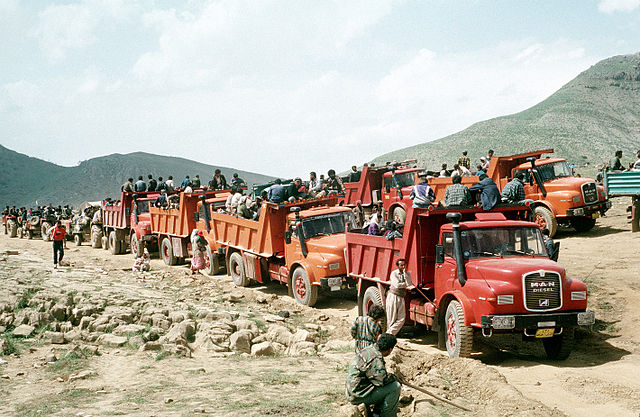
Iraqi Kurds fleeing to Turkey in April 1991, during the Gulf War
Kurds protesting the Siege of Kobanî, 29 September 2014