Human zoo
Videos
Human zoos, also known as ethnological expositions, was a practice of publicly displaying people. In some cases these displays were voluntary on the part of people who willingly agreed, while in other
Poster for an anthropological exhibition in Paris, c. 1870


Ad for a Carl Hagenbeck show (1886)

Ad for an 1893–1894 ethnological exposition of Sámi in Hamburg-Saint Paul

A caricature of Saartjie Baartman, called the Hottentot Venus. Born to a Khoisan family, she was displayed in European cities in the early 19th century.
Expo 58
Videos
Expo 58, also known as the 1958 Brussels World's Fair, was a world's fair held on the Heysel/Heizel Plateau in Brussels, Belgium, from 17 April to 19 October 1958. It was the first major world's fair
Human zoo
…the 20th century, including the British Empire Exhibition of 1924, the Paris Colonial Exposition of 1931, the Portuguese World Exhibition of 1940, and Expo 58 in Brussels. Although exhibition practices varied between countries, organizers, and venues, many human zoos of the late 19th and early 20th centuries…

View of the exhibition's main avenue and gondola lift towards the Atomium

The Atomium, a landmark of Brussels, was built for Expo 58.
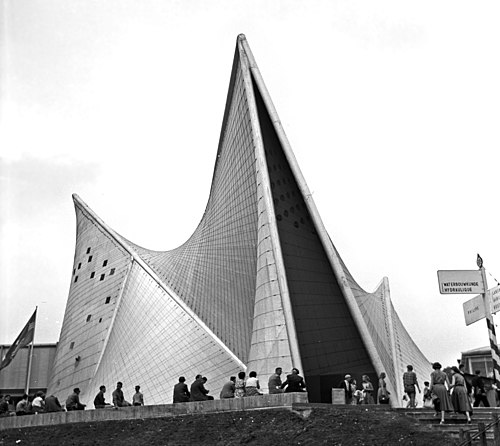
The Philips Pavilion was built to house a multimedia spectacle.

The Centenary Palace served as the exhibition's entrance hall.