Humorism
Videos
Humorism, the humoral theory, or humoralism, was a system of medicine detailing a supposed makeup and workings of the human body, adopted by Ancient Greek and Roman physicians and philosophers.
16th-century German illustration of the four humors: Flegmat (phlegm), Sanguin (blood), Coleric (yellow bile) and Melanc (black bile), divided between the male and female sexes


The four humors as depicted in an 18th-century woodcut: phlegmatic, choleric, sanguine and melancholic
Hippocrates
Videos
Hippocrates of Kos, also known as Hippocrates II, named after his grandfather Hippocrates I was a Greek physician and philosopher of the classical period who is considered one of the most outstanding
Humorism
…Croton (c. 540–500 BC). His list of humors was longer and included fundamental elements described by Empedocles, such as water, earth, fire, air, etc. Hippocrates is usually credited with applying this idea to medicine. In contrast to Alcmaeon, Hippocrates suggested that humors are the vital bodily fluids: blood…
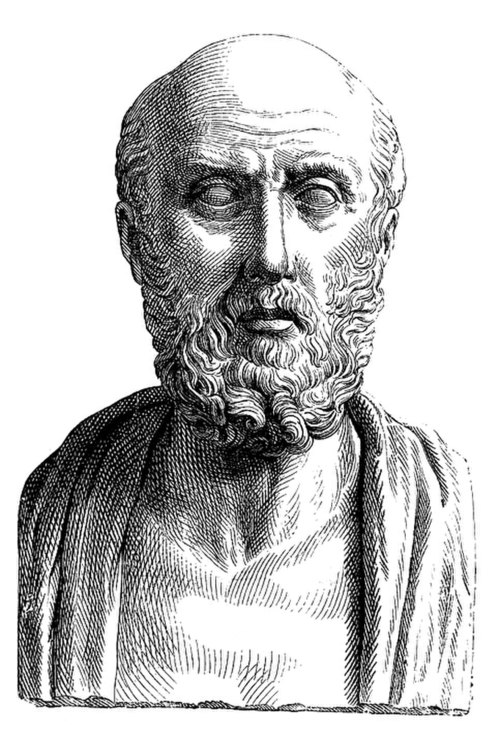
A conventionalized image in a Roman "portrait" bust (19th-century engraving)

Illustration of the story of Hippocrates refusing the presents of the Achaemenid Emperor Artaxerxes, who was asking for his services. Hippocrates Refusing the Gifts of Artaxerxes by Girodet, 1792.

Asklepieion on Kos

A number of ancient Greek surgical tools. On the left is a trephine; on the right, a set of scalpels. Hippocratic medicine made good use of these tools.