Huseyn Shaheed Suhrawardy
Videos
Huseyn Shaheed Suhrawardy was a Pakistani Bengali barrister and politician. In Bangladesh, Suhrawardy is remembered as a pioneer of Bengali civil rights movements, later turned into Bangladesh independence movement, and the mentor of Bangladesh's founding leader Sheikh Mujibur Rahman. He is also remembered for his performance as the Minister for Civil Supply during the Bengal famine of 1943. In India, he is seen as a controversial figure; directly responsible for the 1946 Calcutta Killings, for which he is often referred as the "Butcher of Bengal" in West Bengal.

Suhrawardy was called to the Bar of England and Wales at Gray's Inn
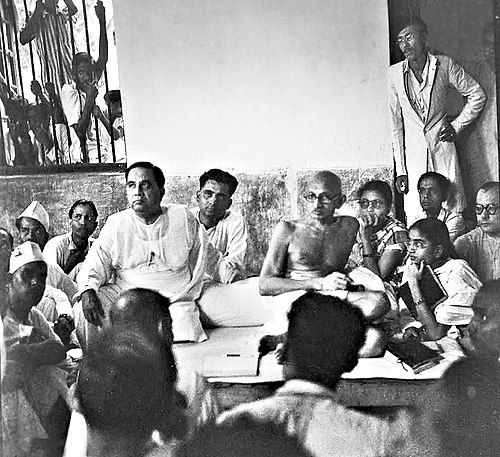
Suhrawardy and Mahatma Gandhi in Noakhali before the partition of India. A young Sheikh Mujib looks on

Suhrawardy and Jinnah at a rally in Calcutta, 1946

Suhrawardy and Gandhi
Bengal famine of 1943
Videos
The Bengal famine of 1943 was an anthropogenic famine in the Bengal province of British India during World War II. An estimated 0.8–3.8 million people died, in the Bengal region, from starvation, malaria and other diseases aggravated by malnutrition, population displacement, unsanitary conditions and lack of health care. Millions were impoverished as the crisis overwhelmed large segments of the economy and catastrophically disrupted the social fabric. Eventually, families disintegrated; men sold their small farms and left home to look for work or to join the British Indian Army, and women and children became homeless migrants, often travelling to Calcutta or other large cities in search of organised relief.

From the photo spread in The Statesman on 22 August 1943 showing famine conditions in Calcutta. These photographs made world headlines and spurred government action.

Rice farmers ploughing a rice field with water buffaloes near Gushkara, Bengal, 1944

Satellite view of the Sundarbans

Indian refugees flee Burma along the Prome Road from Rangoon to Mandalay and eventually on to India, January 1942.