Hydrogen vehicle
Videos
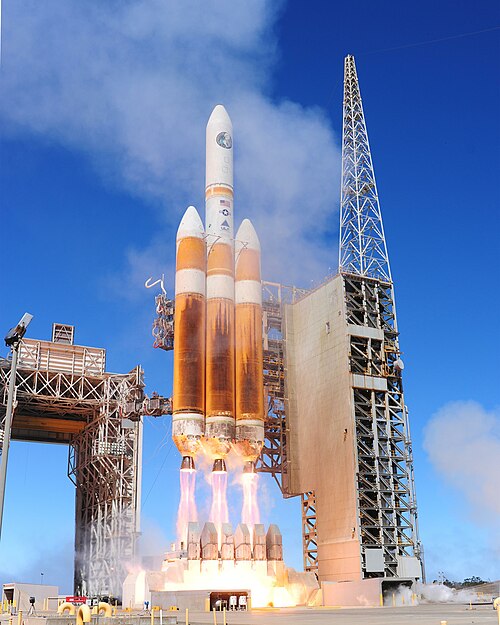
A hydrogen vehicle is a vehicle that uses hydrogen to move it. Hydrogen vehicles include some road vehicles, rail vehicles, space rockets, forklifts, ships and aircraft. Motive power is generated by converting the chemical energy of hydrogen to mechanical energy, either by reacting hydrogen with oxygen in a fuel cell to power electric motors or, less commonly, by hydrogen internal combustion.

The Honda FCX, along with the Toyota FCHV, is the world's first government-certified commercial hydrogen fuel cell vehicle.

Centaur (rocket stage) was the first to use liquid hydrogen

The Toyota Mirai
Electric vehicle
Videos
An electric vehicle (EV) is a vehicle that uses one or more electric motors for propulsion. The vehicle can be powered by a collector system, with electricity from extravehicular sources, or can be powered autonomously by a battery or by converting fuel to electricity using a generator or fuel cells. EVs include road and rail vehicles, electric boats and underwater vessels, electric aircraft and electric spacecraft.

Thomas Edison and George Meister in a Studebaker electric runabout, 1909

A charging station in Seattle shows an AMC Gremlin, modified to take electric power; it had a range of about 50 miles (80 km) on one charge, 1973
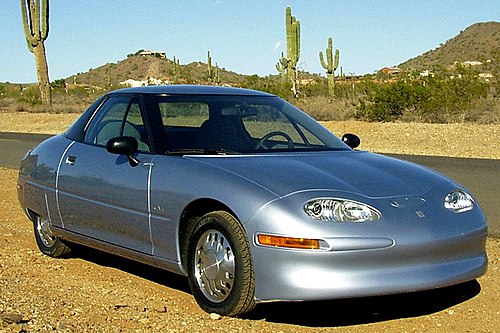
General Motors EV1 electric car (1996–1998), a subject of the film Who Killed the Electric Car?

A passenger train, taking power through a third rail with return through the traction rails