Immigration to Bhutan has an extensive history and has become one of the country's most contentious social, political, and legal issues. Since the twentieth century, Bhutanese immigration and citizenship laws have been promulgated as acts of the royal government, often by decree of the Druk Gyalpo on advice of the rest of government. Immigration policy and procedure are implemented by the Lhengye Zhungtshog Ministry of Home and Cultural Affairs, Department of Immigration. Bhutan's first modern laws regarding immigration and citizenship were the Bhutanese Citizenship Act 1958 and subsequent amendments in 1977. The 1958 Act was superseded by the Bhutanese Citizenship Act 1985, which was then supplemented by a further Immigration Act in 2007. The Constitution of 2008 included some changes in Bhutan's immigration laws, policy, and procedure, however prior law not inconsistent with the 2008 Constitution remained intact. Bhutan's modern citizenship laws and policies reinforce the institution of the Bhutanese monarchy, require familiarity and adherence to Ngalop social norms, and reflect the social impact of the most recent immigrant groups.

Bhutanese refugees
The Druk Gyalpo is the head of state of the Kingdom of Bhutan. In the Dzongkha language, Bhutan is known as Drukyul which translates as "The Land of the Thunder Dragon". Thus, while kings of Bhutan are known as Druk Gyalpo, the Bhutanese people call themselves the Drukpa, meaning "people of Druk (Bhutan)".
King of Bhutan
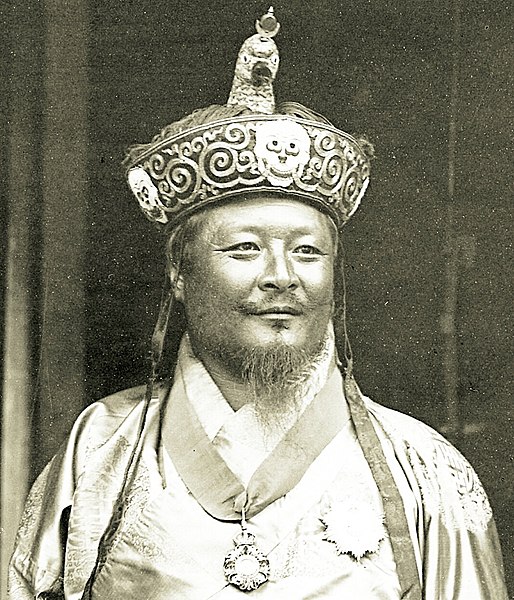
Image: Ugyen Wangchuck, 1905 (cropped)
Image: Bhutan Jigme Wangchuck
Image: 4th King of Bhutan, HM Jigme Singye Wangchuck at a Royal Banquet, at the Taschichhodzong, in Thimphu, Bhutan