Imperial Japanese Army
Videos
The Imperial Japanese Army was the principal ground force of the Empire of Japan from 1871 to 1945. It played a central role in Japan's rapid modernization during the Meiji period, fought in numerous
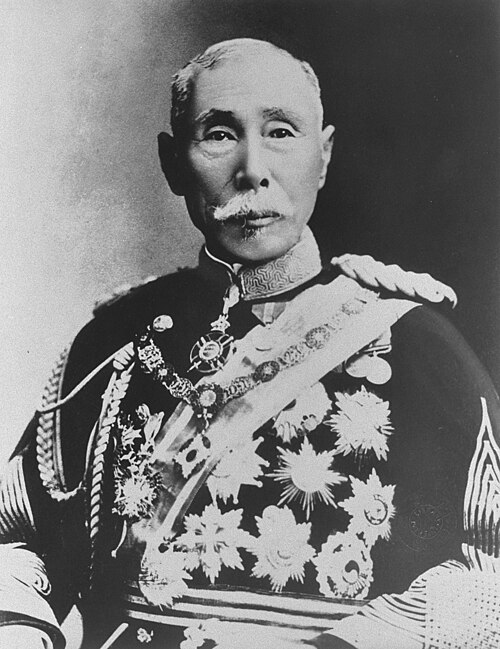
Prince Aritomo Yamagata, a field marshal in the Imperial Japanese Army and twice Prime Minister of Japan. He was one of the main architects of the military foundations of early modern Japan. Yamagata Aritomo can be seen as the father of Japanese militarism.

Barrack of the Imperial Guard, circa 1940

Marquis Nozu Michitsura, a field marshal in the early Imperial Japanese Army. He was appointed as chief of staff of the Imperial Guard (Japan) in 1874.

Marquis Jutoku Saigo, a general in the early Imperial Japanese Army and the nephew of Saigō Takamori, the leader of the Satsuma Rebellion of 1877. Many of the rebels were incorporated into the Imperial Army after the failure of the armed uprising.
Nanjing Massacre
Videos
The Nanjing Massacre or the Rape of Nanjing was the mass rape and murder, between December 1937 and March 1938, of Chinese civilians, noncombatants, and prisoners of war by the Imperial Japanese Army
Imperial Japanese Army
…II, the Imperial Japanese Army had shown immense brutality and engaged in numerous atrocities against civilians, as well as prisoners of war – with the Nanjing Massacre being the most well known example. Other war crimes committed by the Imperial Japanese Army included rape and forced prostitution, death marches, using…

A Japanese soldier pictured with the corpses of Chinese civilians by the Qinhuai River

An article on the "Contest to kill 100 people using a sword" published in the Tokyo Nichi Nichi Shimbun. The headline reads, "'Incredible Record' (in the Contest to Cut Down 100 People) – Mukai 106–105 Noda – Both 2nd Lieutenants Go into Extra Innings".

A Japanese soldier poses with the severed head of one of his victims

Members of the International Committee for the Nanking Safety Zone, including John Rabe (center) and John Magee (center right)