Indian Army
Videos
The Indian Army is the land-based branch and largest component of the Indian Armed Forces. The President of India is the Supreme Commander of the Indian Army, and its professional head is the Chief of

No. 4 (Hazara) Mountain Battery with RML7 pounder "Steel Gun" Mountain Gun in Review Order. Left to right Naick, Havaldar, Subadar (Sikhs) and Gunner (Punjabi Musalman) c. 1895.

Indian Cavalry on the Western Front during World War I.

A Sikh soldier of the 4th Division (the Red Eagles) of the Indian Army, attached to the British Fifth Army in Italy. Holding a captured Nazi flag after the surrender of German forces in Italy, May 1945. Behind him, a fascist inscription says "VIVA IL DUCE", "Long live the Duce" (i.e. Mussolini).
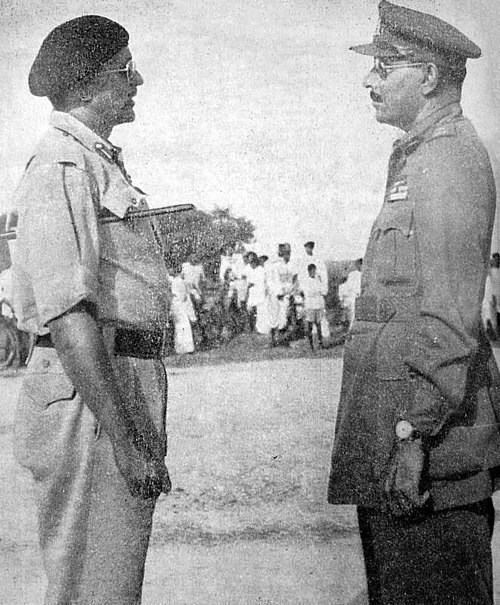
Major General El Edroos (at right) offers his surrender of the Hyderabad State Forces to Major General (later Army Chief) J.N. Chaudhuri at Secunderabad
Dhiraj Seth
Videos
General Dhiraj Seth, PVSM, UYSM, AVSM is a serving four-star general officer of the Indian Army. He is the current and 31st Chief of the Army Staff. He previously served as the 49th Vice Chief of the
Indian Army
…was coined by a retired Army officer, Lieutenant General A B Shivane and later used by the commanding officer of Southern Command, Lieutenant General Dhiraj Seth. Bhairav Battalions are another type of formation that is being raised by the Indian Army. The battalion has a strength of 250 personnel, including 78…

Official Portrait, 2026

Gen Upendra Dwivedi hands over the baton to Gen Dhiraj Seth

Gen Seth as VCOAS