Indian cuisine
Videos
Indian cuisine is not a single ethnic cuisine; instead, it represents the country's national culinary identity. It consists of the regional and ethnic cuisines native to the Indian subcontinent. India
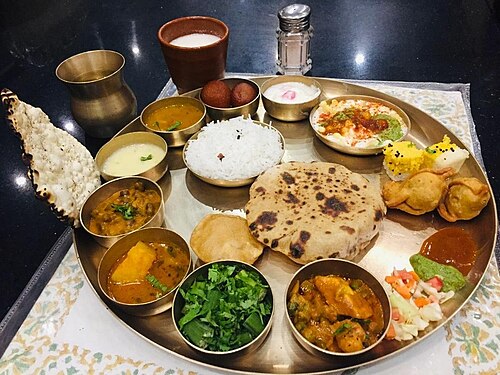
A traditional Indian thali meal served in a metal tray with small dishes for sauces, accompanied by rice, roti and puri

Serving samosas in the c. 16th century Ni'matnāmah Naṣir al-Dīn Shāhī

Spices at a grocery store in India

Lentils are a staple ingredient in Indian cuisine.
Biryani
Videos
Biryani is a mixed rice dish traditionally made with rice, meat, seafood, or vegetables, and spices. It was present in Mughal-era India, though whether it was created there is debated. It is thought t
Indian cuisine
…rule of the Mughal dynasty in India. Mughlai cuisine combined Persian and Hindu cooking, resulting in a range of characteristic dishes such as pilau, biryani, and kebabs. The Portuguese and British during their rule introduced techniques such as baking, and foods from the New World and Europe. New-world…

Hyderabad-style biryani

A modern Persian pilau, havij plo (Persian: هویج پلو, "carrot rice") with rice grains cooked to remain separate and in different colours. Pilau may be an ancestor of biryani.

Biryani can be accompanied by side dishes such as mirchi ka salan and raita.

Lucknowi style mutton kacchi biryani cooked in a clay pot sealed with dough. The dough seal is broken after cooking.