Indian subcontinent
Videos
The Indian subcontinent is a physiographic region of Asia below the Himalayas which projects into the Indian Ocean between the Bay of Bengal to the east and the Arabian Sea to the west. It is now divi
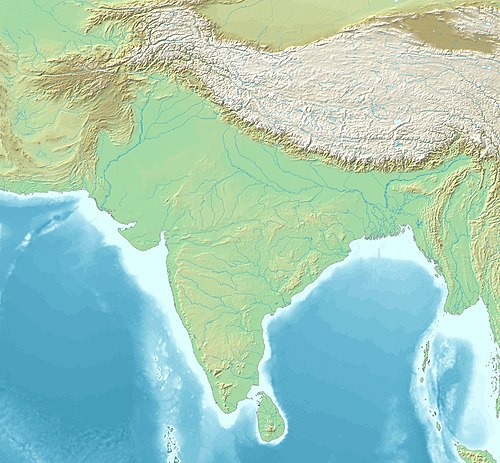
South Asia non political, with rivers

The accretions of the Karakoram, the Kohistan-Ladakh island arc, and the Gangdese belt to Eurasia preceded the final India-Eurasia collision. The stars mark the syntaxis-causing obtrustions.
British Raj
Videos
The British Raj was the period of rule of the British Crown on the Indian subcontinent, lasting from 1858 to 1947. It is also called Crown rule in India, or direct rule in India. The region under Brit
Indian subcontinent
…in many historical sources. Even today, historians use India to denote the entire Indian subcontinent when discussing history up until the era of the British Raj. Over time, however, the term India evolved to refer to a distinct political entity that eventually became a nation-state. According to the Oxford…
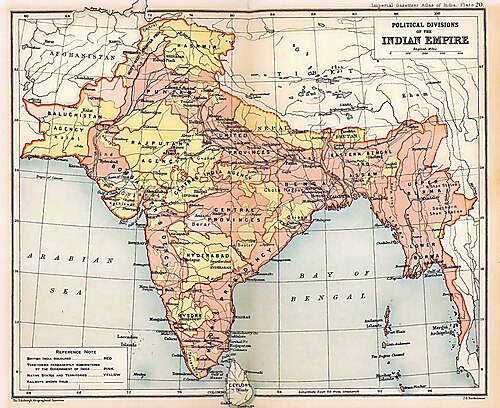
Political subdivisions of the British Raj in 1909. British India is shown in two shades of pink; Sikkim, Nepal, Bhutan, and the princely states are shown in yellow.

The British Raj and surrounding countries are shown in 1909

The British Raj in relation to the British Empire in 1909

Lakshmibai, Rani of Jhansi, one of the principal leaders of the Great Uprising of 1857, who had lost her kingdom by the Doctrine of lapse