Infantry square
Videos
An infantry square, also known as a hollow square or square formation, was a musket-era historic close order formation used in combat by infantry units, usually when threatened with cavalry attack. To
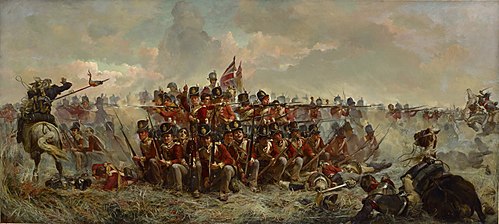
1875 painting of a British infantry square at the 1815 Battle of Quatre Bras by Elizabeth Thompson

Infantry of the French Revolutionary Army in square formation, under attack by Chouan rebels at the Battle of Rocher de La Piochais, 21 December 1795.

The charge of the French Cuirassiers at the Battle of Waterloo against a British square.

Egyptian Mamluk cavalry charges a French infantry square during the Battle of the Pyramids, 1798.
Battle of Quatre Bras
Videos
The Battle of Quatre Bras was fought on 16 June 1815, as a preliminary engagement to the decisive Battle of Waterloo that occurred two days later. The battle took place near the strategic crossroads o
Infantry square
…catch an infantry unit before it formed square properly, the horsemen could usually inflict severe casualties or even destroy the unit completely. The Battle of Quatre Bras (1815) saw several examples, with several British units being surprised at close range by French cavalry hidden by the terrain. Other circumstances…

The Prince of Orange at Quatre Bras Jan Willem Pieneman, 1818

Major-General Jean Victor de Constant Rebecque

The Prince Bernhard of Saxe-Weimar-Eisenach tells the officers of his brigade to stand their ground at Quatre-Bras

Brunswickers during the Battle of Quatre-Bras.