Information technology
Videos
Information technology is the study or use of computers, telecommunication systems and other devices to create, process, store, retrieve and transmit information. While the term is commonly used to re

A computer lab contains a wide range of information technology elements, including hardware, software and storage systems.

Antikythera mechanism, considered the first mechanical analog computer, dating back to the first century BC.

Zuse Z3 replica on display at Deutsches Museum in Munich. The Zuse Z3 is the first programmable computer.

Ferranti Mark I computer logic board
Internet
Videos
The Internet is the global system of interconnected computer networks that uses the Internet protocol suite to communicate between networks and devices. It is a network of networks that comprises priv
Information technology
…workforce drastically, as thirty percent of U.S. workers were already in careers in this profession. 136.9 million people were personally connected to the Internet, which was equivalent to 51 million households. Along with the Internet, new types of technology were also being introduced across the globe, which…

Banner in Bangkok during the 2014 Thai coup d'état, informing the Thai public that 'like' or 'share' activities on social media could result in imprisonment (observed 30 June 2014)
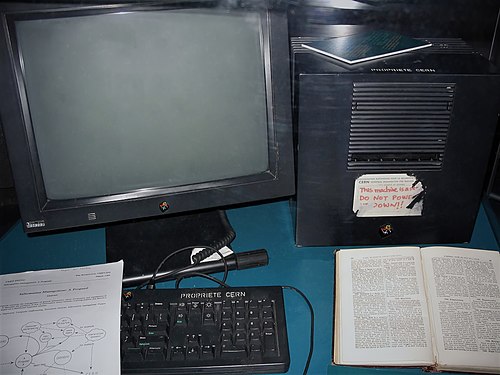
This NeXT Computer was used by Tim Berners-Lee at CERN and became the world's first Web server.

ICANN headquarters in the Playa Vista neighborhood of Los Angeles, California, United States