Infrared
Videos
Infrared is electromagnetic radiation with wavelengths longer than that of visible light but shorter than microwaves. The infrared spectral band begins with the waves that are just longer than those o
Active-infrared night vision: the camera illuminates the scene at infrared wavelengths invisible to the human eye. Despite a dark back-lit scene, active-infrared night vision delivers identifying details, as seen on the display monitor.


Thermography helped to determine the temperature profile of the Space Shuttle thermal protection system during re-entry.
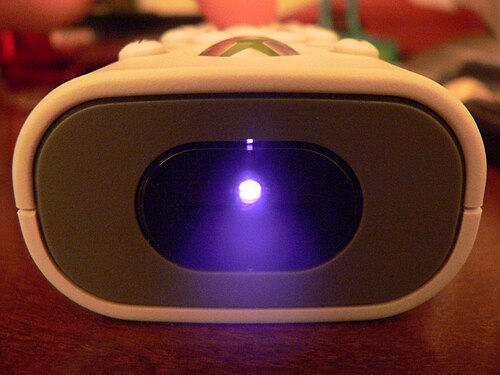
Infrared light from the LED of a remote control as recorded by a digital camera

Reflected light photograph in various infrared spectra to illustrate the appearance as the wavelength of light changes
Light
Videos
Light, visible light, or visible radiation is electromagnetic radiation that can be perceived by the human eye. Visible light spans the visible spectrum and is usually defined as having wavelengths in
Infrared
…Infrared (IR; sometimes called infrared light) is electromagnetic radiation (EMR) with wavelengths longer than that of visible light but shorter than microwaves. The infrared spectral band begins with the waves that are just longer than those of red light (the longest waves in the…

A triangular prism dispersing a beam of white light. The longer wavelengths (red) and the shorter wavelengths (green-blue) are separated.

Beam of sun light inside the cavity of Rocca ill'Abissu at Fondachelli-Fantina, Sicily

Due to refraction, the straw dipped in water appears bent and the ruler scale compressed when viewed from a shallow angle.

Hong Kong illuminated by colorful artificial lighting