Integrated multi-trophic aquaculture is a type of aquaculture where the byproducts, including waste, from one aquatic species are used as inputs for another. Farmers combine fed aquaculture with inorg

Blue mussels (Mytilus edulis) cultivated in proximity to Atlantic salmon (Salmo salar) in the Bay of Fundy, Canada. Note the salmon cage (polar circle) in the background.

IMTA systems in freshwater pond

Off-bottom snail grown on bamboo split in IMTA

Snail produced on pond bottom of IMTA
Aquaculture
Videos
Aquaculture, also known as aquafarming, is the controlled cultivation of aquatic organisms such as fish, crustaceans, mollusks, algae and other organisms of value such as aquatic plants. Aquaculture i
Integrated multi-trophic aquaculture
…Integrated multi-trophic aquaculture (IMTA) is a type of aquaculture where the byproducts, including waste, from one aquatic species are used as inputs (fertilizers, food) for another. Farmers combine fed aquaculture…
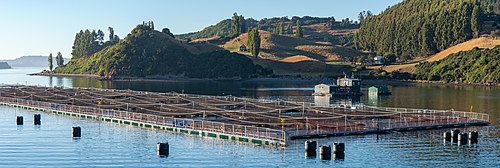
Aquaculture fish farming in the fjords south of Castro, Chile

Cultivating emergent aquatic plants in floating containers

Underwater Eucheuma farming in the Philippines

A seaweed farmer in Nusa Lembongan (Indonesia) gathers edible seaweed that has grown on a rope.