An intercontinental ballistic missile is a ballistic missile with a range greater than 5,500 kilometres, primarily designed for nuclear weapons delivery. Conventional, chemical, and biological weapons
An SM-65 Atlas, the first US ICBM, first launched in 1957

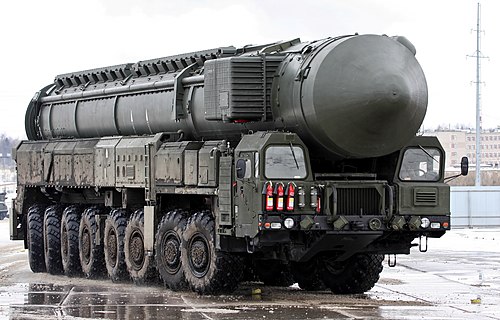
MZKT-79221 transporter erector launcher carrying missile container during rehearsals for the 2012 Moscow Victory Day Parade.

A US Peacekeeper missile launched from a silo
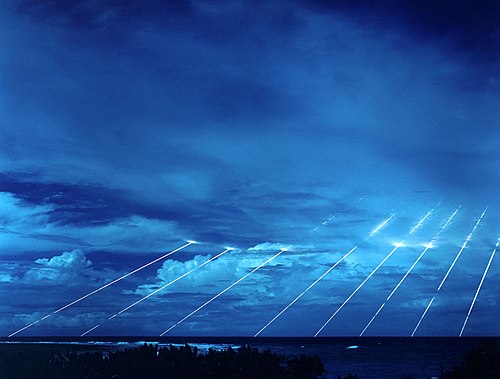
Testing of the Peacekeeper re-entry vehicles at the Kwajalein Atoll. All eight fired from only one missile. Each line, if its warhead were live, represents the potential explosive power of about 300 kilotons of TNT, about 20 times that of the detonation of the atomic bomb in Hiroshima.
Ballistic missile
Videos
A ballistic missile is a type of missile that follows a ballistic trajectory and is powered only during a relatively brief initial period—most of the flight is unpowered. Short-range ballistic missile
Intercontinental ballistic missile
…An intercontinental ballistic missile (ICBM) is a ballistic missile with a range greater than 5,500 kilometres (3,400 mi), primarily designed for nuclear weapons delivery (delivering one or more thermonuclear warheads…
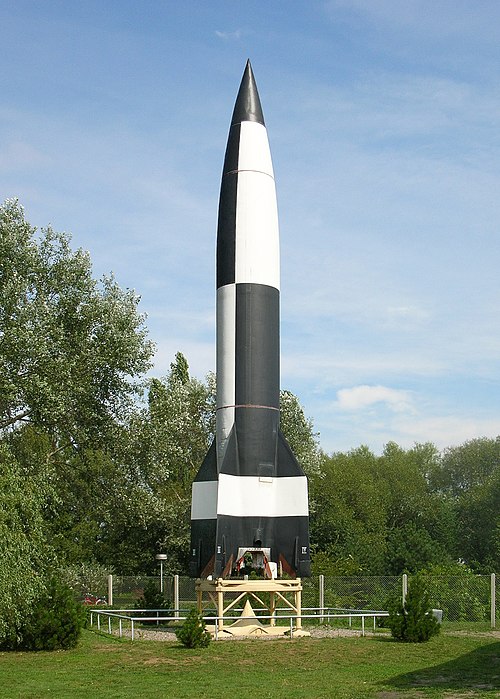
Replica V-2
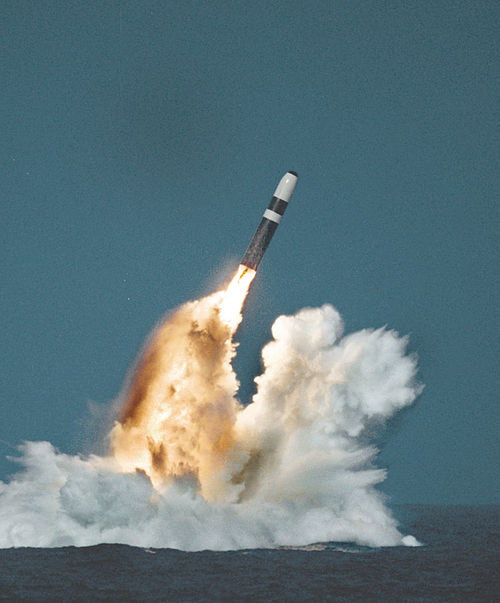
Trident II SLBM launched by ballistic missile submarine