Interfaith dialogue
Videos
Interfaith dialogue, also known as interreligious dialogue, refers to cooperative, constructive, and positive interaction between people of different religious traditions or spiritual or humanistic be
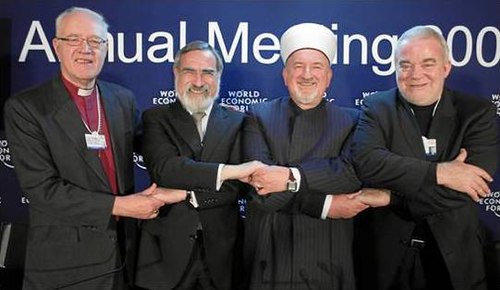
Left to right: George Carey, Archbishop of Canterbury (1991–2002); Jonathan Sacks, Chief Rabbi (UK); Mustafa Cerić, Grand Mufti of Bosnia and Herzegovina; Jim Wallis, Sojourners, US. 2009 World Economic Forum in Davos, Switzerland.

Roadside sign in the Nubra Valley, Ladkah, India

Pope Francis, Leader of the Catholic Church and Nasaruddin Umar, Grand Imam of Istiqlal Mosque in preparing signed the Istiqlal Declaration for dialogue with interfaith leaders in Jakarta, Indonesia.

Russian religious leaders (Armenian, Jewish, Muslim, Buddhist, Orthodox, Old Believer) during the official celebrations of the 2012 National Unity Day
There have been several meetings referred to as a Parliament of the World's Religions, the first being the World's Parliament of Religions of 1893, which was an attempt to create a global dialogue of
Interfaith dialogue
…formally or informally linked and constitute larger networks or federations. These include organisations such as the United Religions Initiative, the Parliament of the World's Religions, and interfaith training institutions like OneSpirit Interfaith Foundation in the United Kingdom, which since 1996, has prepared interfaith ministers…

Chicago meeting, 1893

Parliament of Religions September 1893. On the platform (left to right) Virchand Gandhi, Anagarika Dharmapala, Swami Vivekananda and G. Bonet Maury