Internment
Videos
Internment is the imprisonment of people, commonly in large groups, without charges or intent to file charges. The term is especially used for the confinement "of enemy citizens in wartime or of terro

Boer women and children in a British concentration camp in South Africa (1899–1902)

Fort Marr is the last surviving remnant of the American forts used to intern the Cherokee in preparation for their removal to Indian Territory, months prior the "Trail of Tears".
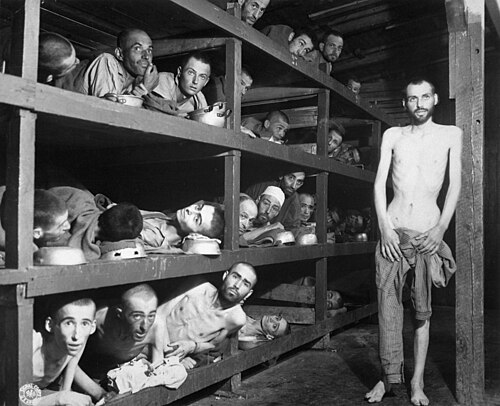
Jewish slave laborers at the Buchenwald concentration camp near Weimar photographed after their liberation by the Allies on 16 April 1945

Armenian refugees collected near the body of a dead horse at Deir ez-Zor, during the Armenian genocide
Xinjiang internment camps
Videos
The Xinjiang internment camps are internment camps operated by the government of Xinjiang and the Chinese Communist Party Provincial Standing Committee. Human Rights Watch says that they have been use
Internment
…According to the United States Department of Defense as many as 3 million Uyghurs and members of other Muslim minority groups are being held in China's re-education camps which are located in the Xinjiang region and which American news reports often label as concentration camps. The camps were established in the late…

Detainees listening to speeches in a camp in Lop County, Xinjiang, April 2017

Museum für Indische Kunst Dahlem Berlin Mai 2006 063

Xian Great Mosque 07

Xi Jinping meets Putin May 2026