Intrusive rock
Videos
Intrusive rock is formed when magma penetrates existing rock, crystallizes, and solidifies underground to form intrusions, such as batholiths, dikes, sills, laccoliths, and volcanic necks.
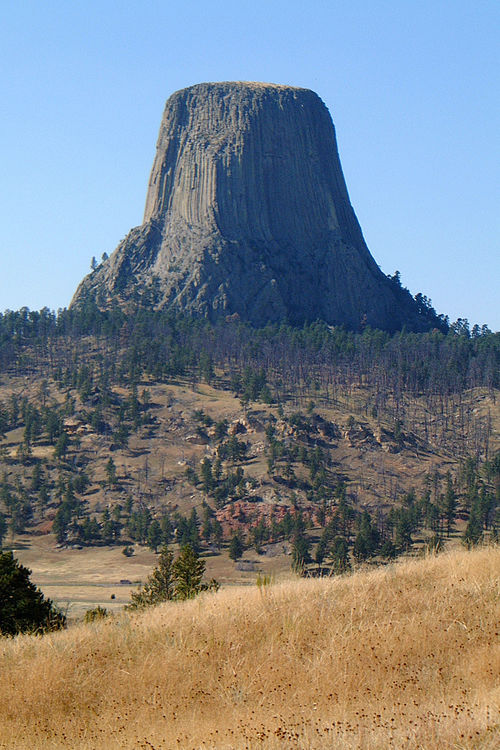
Devils Tower, United States, an igneous intrusion exposed when the surrounding softer rock eroded away

An intrusion (pink Notch Peak monzonite) inter-fingers (partly as a dike) with highly metamorphosed black-and-white-striped host rock (Cambrian carbonate rocks) near Notch Peak, House Range, Utah, United States

Dark dikes intruded into the country rock, Baranof Island, Alaska, United States
Igneous intrusion
Videos
In geology, an igneous intrusion is a body of intrusive igneous rock that forms by crystallization of magma slowly cooling below the surface of the Earth. Intrusions have a wide variety of forms and c
Intrusive rock
…Intrusive rock is formed when magma penetrates existing rock, crystallizes, and solidifies underground to form intrusions, such as batholiths, dikes, sills, laccoliths, and volcanic necks. Intrusion is one of the two ways igneous rock can form. The other is extrusion, such…

A Jurassic pluton of pink monzonite intruded below a section of gray sedimentary rocks which was subsequently uplifted and exposed, near Notch Peak, House Range, Utah.

The exposed laccolith atop a massive pluton system near Sofia, formed by the Vitosha syenite and Plana diorite domed mountains and later uplifted

Thermal profiles at different times after intrusion, illustrating square root law