Inverness cape
Videos
The Inverness cape is a form of weatherproof outer-coat. It is notable for being sleeveless, the arms emerging from armscyes beneath a cape. The cape is also called havelock after Henry Havelock.
The formal form with lapels, 1901


Formal coat without lapels, 1900

An 1830 caricature of the Duke of Wellington as a coachman.

A coachwoman in London in 2011. She wears a multilayer cape.
Ulster coat
Videos
The Ulster is a Victorian working daytime overcoat, with a cape and sleeves.
Inverness cape
…being sleeveless, the arms emerging from armscyes beneath a cape (the sleeved version is an Inverness coat; the shorter-caped, sleeved version is an Ulster coat). The cape is also called havelock after Henry Havelock. The Inverness cape is a water-repellent garment. The extra layer of cloth at the shoulders…

A 1903 fashion plate of an Ulster, showing how the forearms can be brought under the cape.

Sherlock Holmes wearing an ulster coat in one of the original Strand Magazine illustrations of The Adventure of the Blue Carbuncle
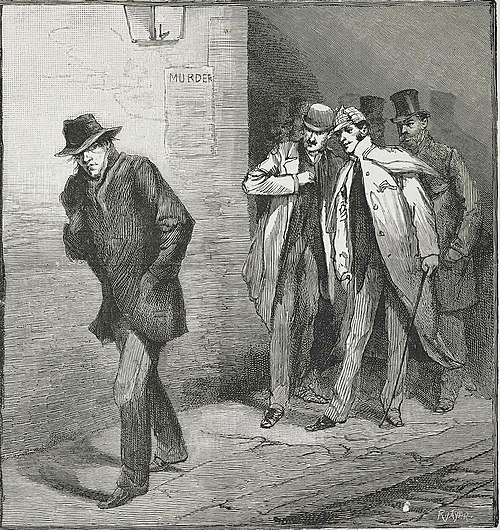
Depiction of Jack the Ripper taken from a series of images from the Illustrated London News for 13 October 1888 carrying the overall caption, "With the Vigilance Committee in the East End". This specific image is entitled "A Suspicious Character". The frontmost follower wears a deerstalker hat and an Ulster coat
Clothes