Ionia
Videos
Ionia was an ancient region encompassing the central part of the western coast of Anatolia. It consisted of the northernmost territories of the Ionian League of Greek settlements. Never a unified stat

Mount Mycale, site of the Panionium

Gorgone with serpent, Ionia, 575-550 BC.

One of the earliest electrum coins struck in Ephesus, 620–600 BC. Obverse: Forepart of stag. Reverse: Square incuse punch.
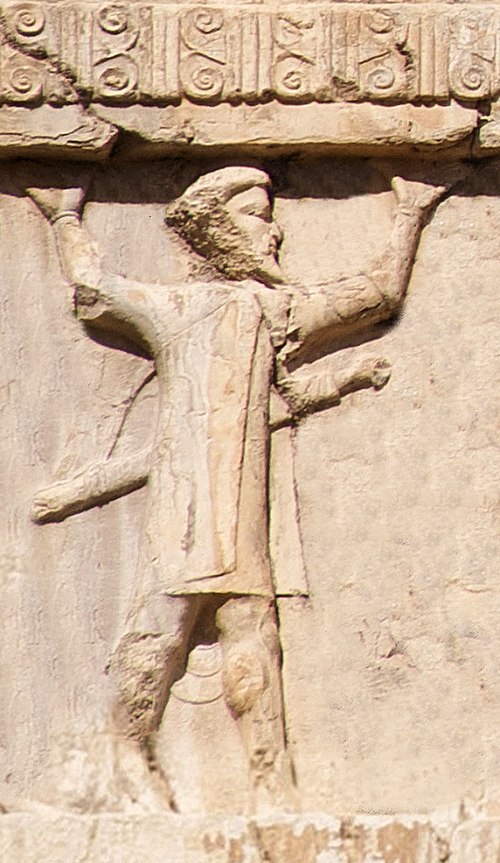
Ionian soldier of the Achaemenid army, c. 480 BCE.
Ionians
Videos
The Ionians were one of the four major tribes that the Greeks considered themselves to be divided into during the ancient period; the other three being the Dorians, Aeolians, and Achaeans. The Ionian
Ionia
…coast of Anatolia. It consisted of the northernmost territories of the Ionian League of Greek settlements. Never a unified state, it was named after the Ionians who had settled in the region before the archaic period. Ionia proper comprised a narrow coastal strip from Phocaea in the north near the mouth of the…

The Seleucid king Antiochos ("Aṃtiyako Yona Rājā" ("The Yona king Antiochos")) is named as a recipient of Ashoka's medical treatments, together with his Hellenistic neighbours, in the Edicts of Ashoka (circa 250 BCE).

"Aṃtiyako Yona Rājā" ("The Greek king Antiochos"), mentioned in Major Rock Edict No.2, here at Girnar. Brahmi script.

Portrait of Herodotus, Roman copy of a 4th century Greek original