Iraq actively researched weapons of mass destruction and used chemical weapons from 1962 to 1991, after which its chemical weapons stockpile was destroyed and its nuclear weapons program and its biolo

The Baghdad Nuclear Research Facility on 10 March 1991, after it was bombed by the U.S. in the Gulf War

February 5, 2003 – United States Secretary of State Colin Powell holding a model vial of anthrax while giving the presentation to the United Nations Security Council
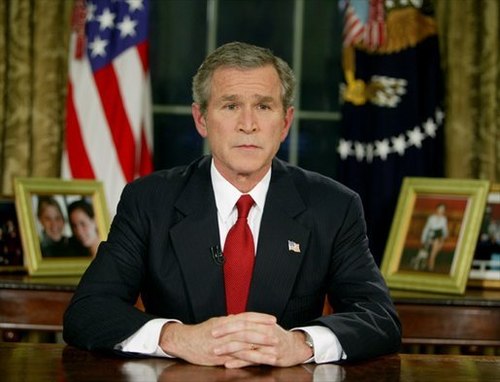
President George W. Bush addresses the nation from the Oval Office, March 19, 2003, to announce the beginning of Operation Iraqi Freedom. "The people of the United States and our friends and allies will not live at the mercy of an outlaw regime that threatens the peace with weapons of mass murder." The Senate committee found that many of the administration's pre-war statements about Iraqi WMD were not supported by the underlying intelligence.
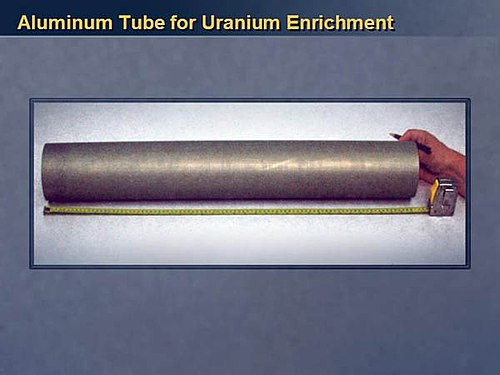
Presentation slide used by U.S. Secretary of State Colin Powell at the UN Security Council in the lead up to the 2003 invasion of Iraq
Gulf War
Videos
The Gulf War was an armed conflict between Iraq and a 42-country coalition led by the United States in response to Saddam Hussein invading neighboring Kuwait on 2 August 1990. The coalition's efforts
Iraq and weapons of mass destruction
…troops during the Iran–Iraq War. Saddam pursued extensive biological and nuclear weapons programs, but did not construct a nuclear weapon. After the Gulf War, the United Nations Special Commission located, confiscated, and destroyed large quantities of Iraqi chemical weapons and infrastructure; Iraq ceased…
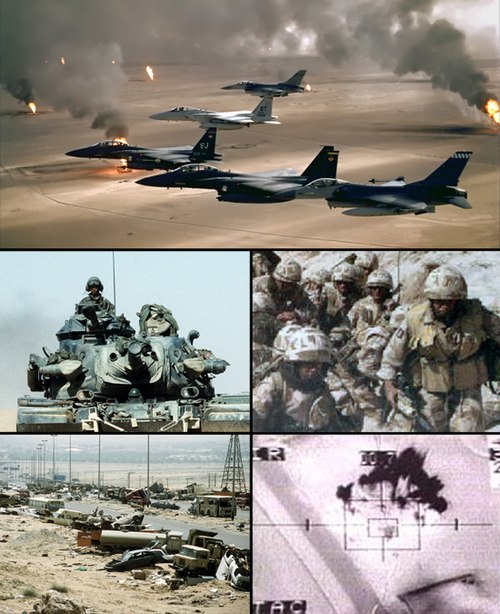

USAF F 16A F 15C F 15E Desert Storm edit 2

Tank in Desert Storm

British gulf war

Demolished vehicles line Highway 80 on 18 Apr 1991