Islamic views on Jesus's death
The biblical account of the crucifixion, death, and resurrection of Jesus (ʿĪsā) recorded in the Christian New Testament is traditionally rejected by the major branches of Islam, but like Christians they believe that Jesus ascended to heaven and he will, according to Islamic literary sources, return before the end of time. The various sects of Islam have different views regarding this topic; traditionally, mainstream Muslims believe that Jesus was not crucified but was bodily raised up to heaven by God, while Ahmadi Muslims reject this belief and instead contend that Jesus survived the crucifixion, was taken off the cross alive and continued to preach in India until his natural death.
Payrus of Irenaeus' treatise Against Heresies, which describes early Gnostic beliefs about Jesus' death which predated and influenced Islam.
The Roza Bal shrine in Srinagar, Kashmir, believed by Ahmadi Muslims to be the tomb of Jesus.
The crucifixion of Jesus was the execution by crucifixion of Jesus of Nazareth in 1st-century Judaea, most likely in AD 30 or AD 33. It is described in the four canonical gospels, referred to in the New Testament epistles, attested to by other ancient sources, and is broadly accepted as one of the events most likely to have occurred during his life. There is no consensus among historians on the details.
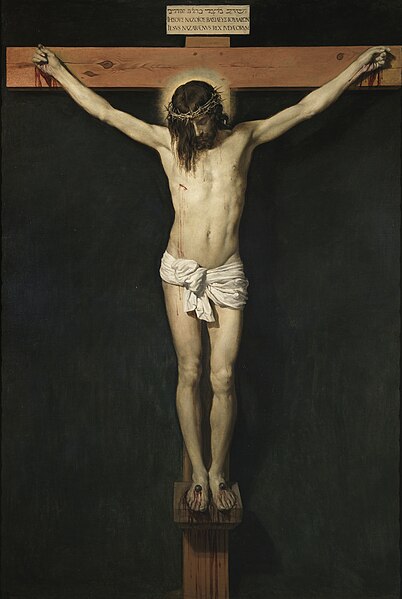
Christ Crucified (c. 1632) by Diego Velázquez
A depiction of the Raising of the Cross, by Sebastiano Mazzoni, 17th century, Ca' Rezzonico
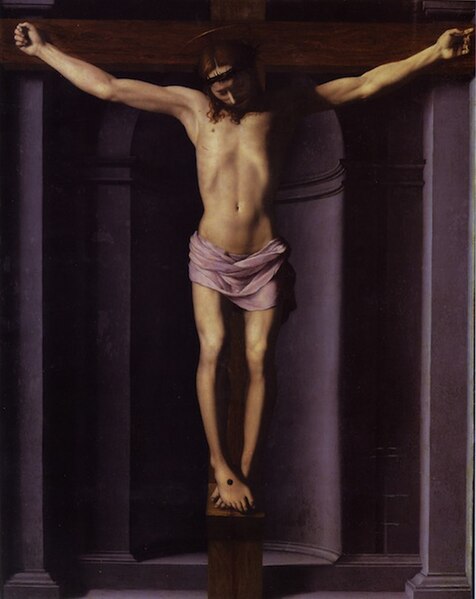
Bronzino's depiction of the crucifixion with three nails, no ropes, and a hypopodium standing support, c. 1545
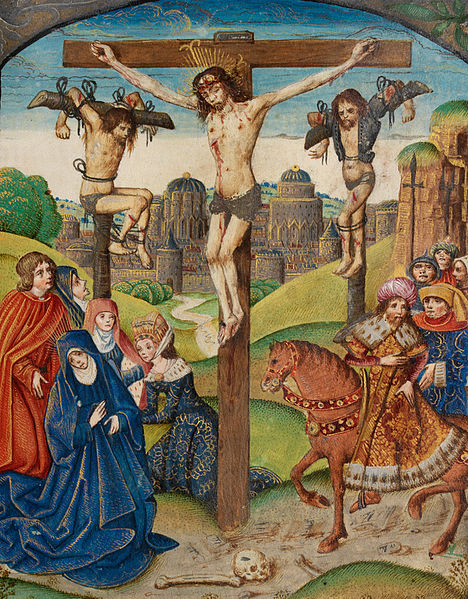
Christ on the Cross between two thieves. Illumination from the Vaux Passional, 16th century