Ixion
Videos
In Greek mythology, Ixion was king of the Lapiths, the most ancient tribe of Thessaly. Ixion desired Hera, the queen of the gods and wife of Zeus, and his arrogant attempt to have sex with her led to
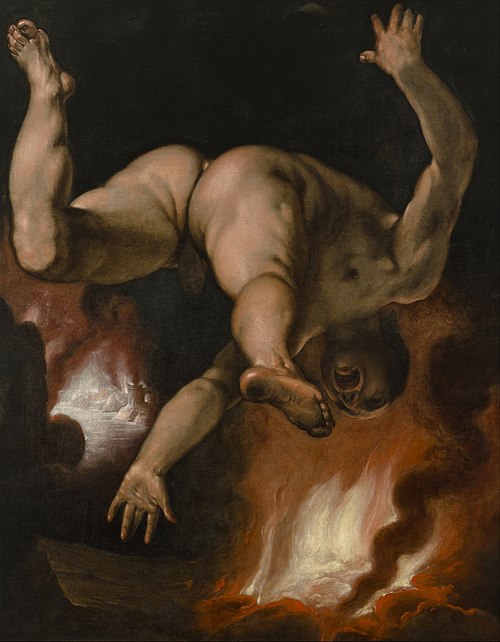
The Fall of Ixion by Cornelis van Haarlem
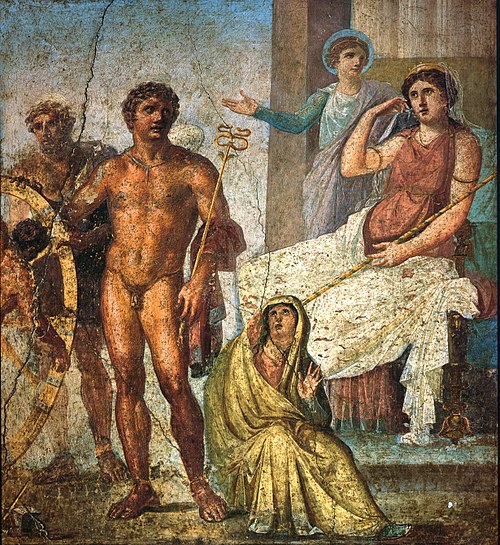
'Punishment of Ixion', a Roman fresco from the eastern wall of the triclinium in the House of the Vettii, Pompeii, Fourth Style (60–79 CE) Mercury is in the center, holding the caduceus. Nephele sits at Mercury's feet. On the right Juno sits on her throne. Iris stands behind Juno, gesturing. Vulcan is the blond figure at the upper left, holding and standing behind the wheel. Ixion is at the lower left, already bound on the wheel.

Ixion by Jules-Elie Delaunay (1876)

José Ribera's Ixion (1632) Museo del Prado.
Tartarus
Videos
In Greek mythology, Tartarus is the deep abyss that is used as a dungeon of torment and suffering for the wicked and as the prison for the Titans. Tartarus is the place where, according to Plato's Gor
Ixion
…Thessaly. Ixion desired Hera, the queen of the gods and wife of Zeus, and his arrogant attempt to have sex with her led to his eternal punishment in Tartarus. Ixion was the son of Perimele, and either Ares, Leonteus, or Antion, or Phlegyas (whose name connotes "fiery"). Ixion had a son named Pirithous Pirithous…

Persephone supervising Sisyphus in the Underworld, Attic black-figure amphora, c. 530 BC

Henryk Siemiradzki Orfeusz w podziemnym królestwie

John Martin 002

Buddhist hell