Józef Dowbor-Muśnicki was a Russian military officer and Polish general, serving with the Imperial Russian and then Polish armies. He was also the military commander of the Greater Poland Uprising.
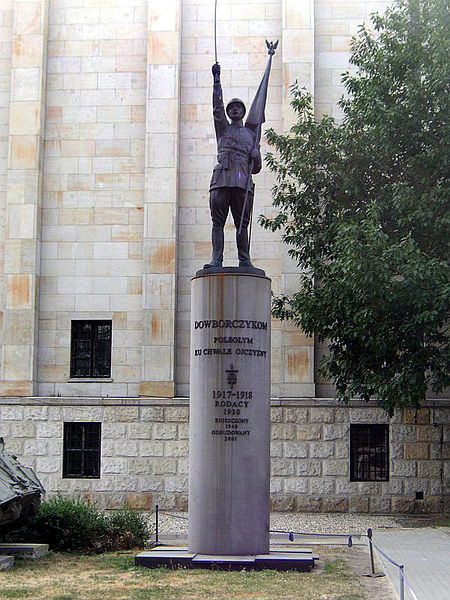
Monument to Dowbor-Muśnicki's men in Warsaw
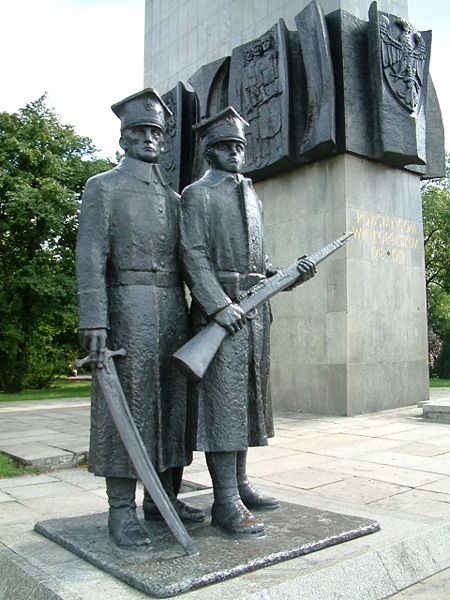
Part of monument of Polish insurgents of Greater Poland Uprising in Poznań
The grave stone commemorating Agnieszka Dowbor-Muśnicka and her sister Janina at the family tomb in Lusów cemetery.
Greater Poland uprising (1918–1919)
The Greater Poland uprising of 1918–1919, or Wielkopolska uprising of 1918–1919 or Posnanian War was a military insurrection of Poles in the Greater Poland region against German rule. The uprising had a significant effect on the Treaty of Versailles, which granted a reconstituted Second Polish Republic the area won by the Polish insurrectionists. The region had been part of the Kingdom of Poland and then Polish–Lithuanian Commonwealth before the 1793 Second Partition of Poland when it was annexed by the German Kingdom of Prussia. It had also, following the 1806 Greater Poland uprising, been part of the Duchy of Warsaw (1807–1815), a French puppet state during the Napoleonic Wars.
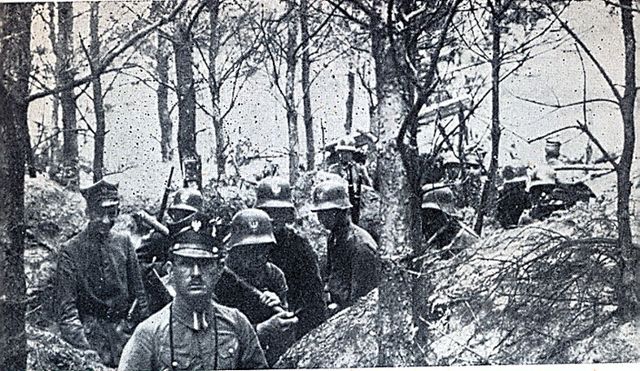
Polish soldiers in trenches on the Polish-German front, January 1919
Soldiers and workers assembling to elect a council in Poznań, 10 November 1918
German armored train during Grenzschutz in the station of Lissa in 1919.
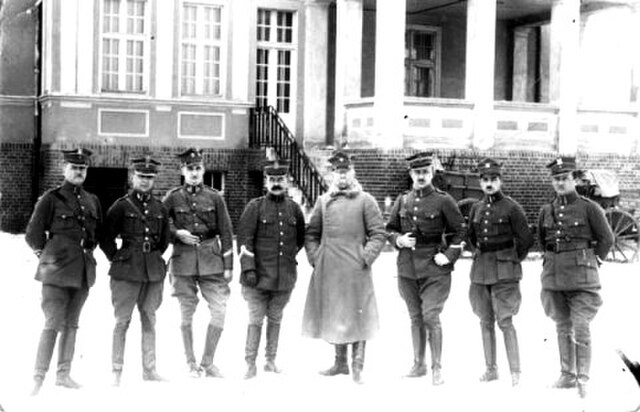
Soldiers of the Greater Poland Army during the winter of 1919/20