James Coutts Crawford
Videos
Captain James Coutts Crawford was an officer in the Royal Navy who served during the American War of Independence and the French Revolutionary and Napoleonic Wars.
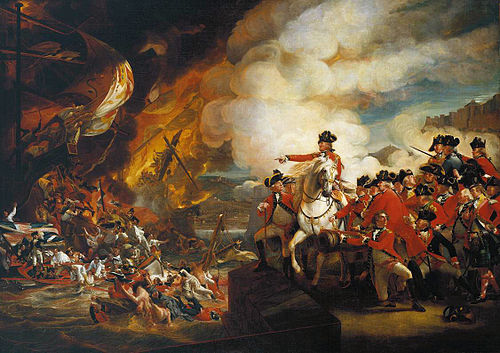
The Defeat of the Floating Batteries at Gibraltar, September 1782, by John Singleton Copley. Depicting the September assault, which Crawford served throughout.

Batavia, on the island of Java, target of the British force in mid-1811

James Coutts Crawford, a naval officer like his father, and later a prominent citizen of New Zealand
Vice-Admiral John Inglis was a Royal Navy officer who served at the Battle of Camperdown in 1797.
James Coutts Crawford
…had a daughter, Mary. Mary married the naval officer Henry Duncan in 1823. Crawford's second wife, Jane Inglis, was the eldest daughter of Vice-Admiral John Inglis. The couple had a son together, James Coutts Crawford, better known as Coutts Crawford. Captain James Coutts Crawford died at Liverpool on 10 May 1828…

The Battle of Camperdown

Belliqueux's position in the Battle of Camperdown (g)

The burial vault of Admiral John Inglis, Colinton churchyard, Edinburgh