James F. Byrnes
Videos
James Francis Byrnes was an American judge and politician from South Carolina. A member of the Democratic Party, he served in the U.S. Congress and on the U.S. Supreme Court, as well as in the executi
Byrnes, c. 1941–1942


Potsdam Conference: Sitting (from left) Clement Attlee, Ernest Bevin, Vyacheslav Molotov, Joseph Stalin, William Daniel Leahy, James F. Byrnes and Harry S. Truman.

Sitting (from left): Clement Attlee, Harry S. Truman, Joseph Stalin; behind: William Daniel Leahy, Ernest Bevin, James F. Byrnes and Vyacheslav Molotov.
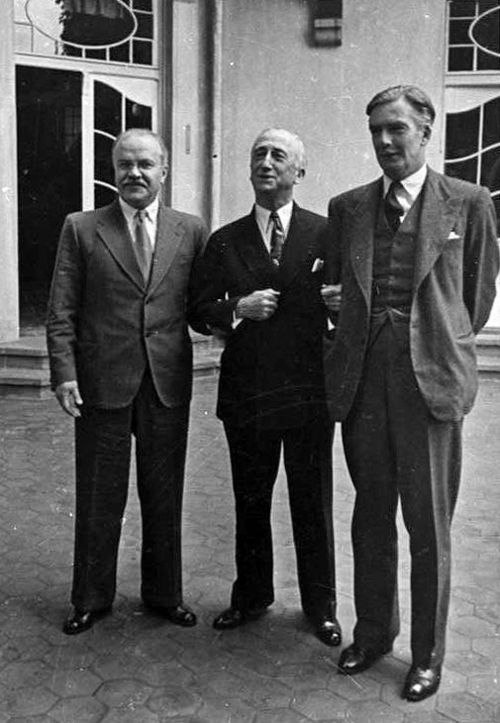
The Foreign Ministers: Vyacheslav Molotov, James F. Byrnes and Anthony Eden, July 1945.
Edward Stettinius Jr.
Videos
Edward Reilly Stettinius Jr. was an American businessman who served as United States Secretary of State under presidents Franklin D. Roosevelt and Harry S. Truman from 1944 to 1945, and as U.S. Ambass
James F. Byrnes
…by George Bell Timmerman Jr. 49th United States Secretary of State In office July 3, 1945 – January 21, 1947 President Harry S. Truman Preceded by Edward Stettinius Jr. Succeeded by George Marshall Director of the Office of War Mobilization In office May 27, 1943 – July 3, 1945 President Franklin D. Roosevelt Harry S…

Stettinius in 1939
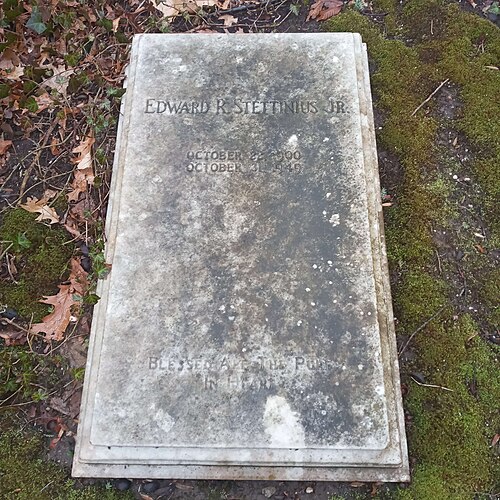
The gravesite of Edward Stettinius Jr.