Jami' al-tawarikh
Videos
Jāmiʿ al-Tawārīkh is a work of literature and history, produced in the Mongol Ilkhanate. Written by Rashid al-Din Hamadani at the start of the 14th century, the breadth of coverage of the work has cau

Mongol soldiers, in Jami al-tawarikh by Rashid-al-Din Hamadani, BnF. MS. Supplément Persan 1113. 1430–1434 AD.

Mountains between India and China, Khalili Collection of Islamic Art

Equestrian battle in front of a city gate. Rashid ad-Din, Jami al-Tawarikh, Diez Albums, 1300–1325
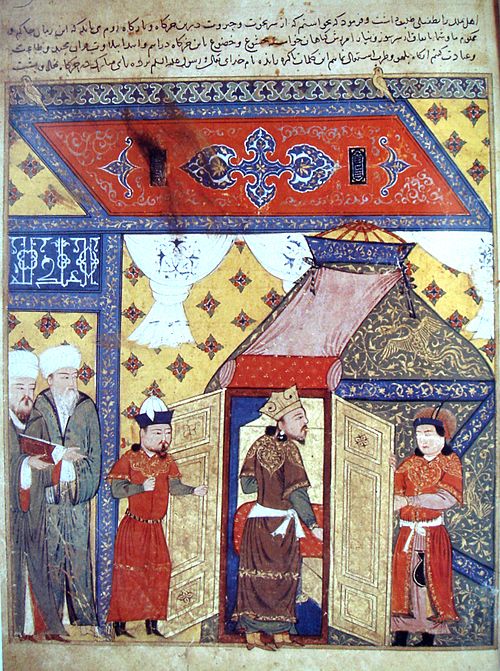
"The conversion of Ghazan Khan to Islam", Timurid manuscript, Bibliothèque nationale de France, Supplément persan 1113, c. 1430
Ilkhanate
Videos
The Ilkhanate or Il-khanate was a Mongol khanate founded in the southwestern territories of the Mongol Empire. It was ruled by the Il-Khans or Ilkhanids, and known to the Mongols as Hülegü Ulus. The I
Jami' al-tawarikh
…Jāmiʿ al-Tawārīkh (lit. 'The Compendium of Chronicles') is a work of literature and history, produced in the Mongol Ilkhanate. Written by Rashid al-Din Hamadani (1247–1318 AD) at the start of the 14th century, the breadth of coverage of the work has caused it to be called "the…

Ilkhanid depiction of mounted warriors pursuing enemies, from Rashid al-Din's Jami' al-tawarikh, early 14th century
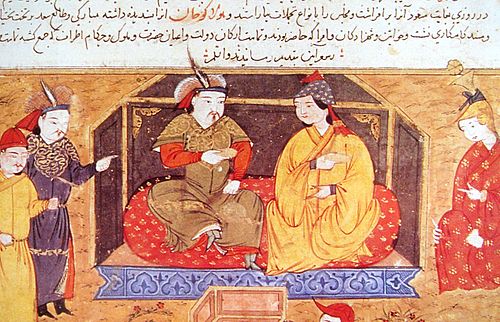
Hulegu Khan, founder of the Ilkhanate, with his Christian queen Doquz Khatun

A Mongol horse archer of the 13th century

Silver dirham of Hulegu minted in Urmia, with the title Qa'an al-'Azam (Greatest Khagan). Before the reign of Ghazan, Ilkhans referred to the great Mongol khans in the coin inscriptions and official documents.