Janus
Videos
In ancient Roman religion and myth, Janus is the god of beginnings, gates, transitions, time, duality, doorways, passages, frames, and endings. He is usually depicted as having a double-sided head. Th
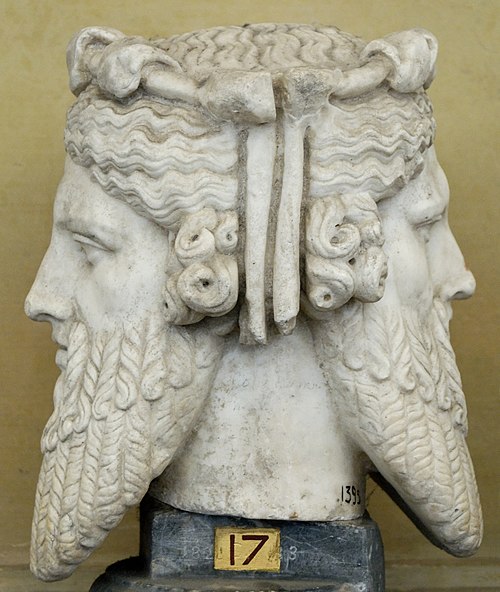
Statue representing Janus Bifrons in the Vatican Museums
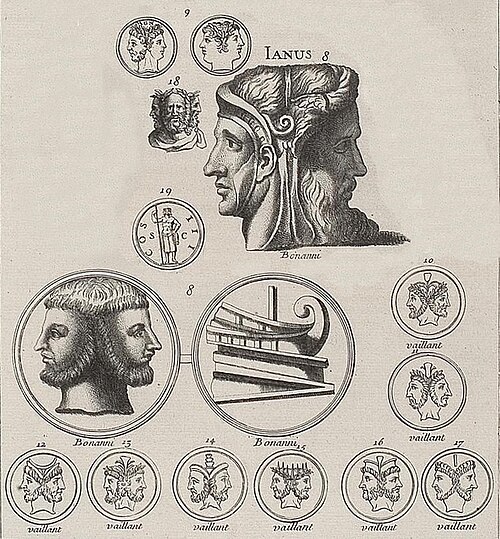
Different depictions of Janus from Bernard de Montfaucon's L'antiquité expliquée et représentée en figures

The temple of Janus with closed doors, on a sestertius issued under Nero in 66 AD from the mint at Lugdunum
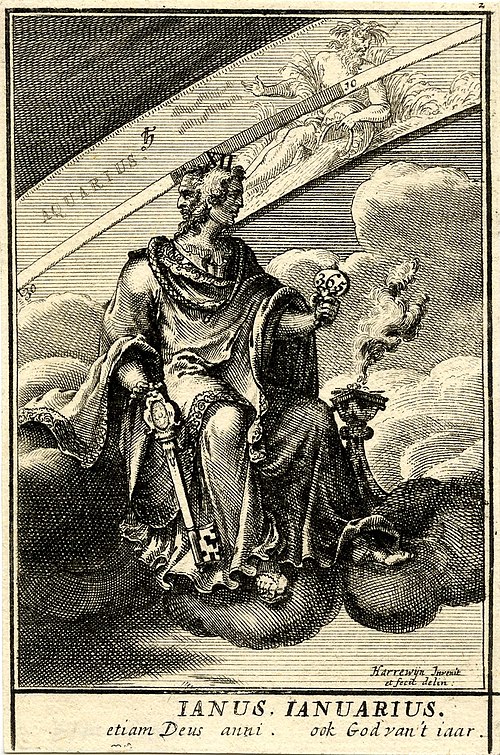
The month of January is named after Janus.
The Temple of Janus stood in the Roman Forum near the Basilica Aemilia, along the Argiletum. It was a small temple with a statue of Janus, the two-faced god of boundaries and beginnings inside. Its do
Janus
…Juno is the tutelary deity of the month of June. Janus presided over the beginning and ending of conflict, and hence war and peace. The gates of the Temple of Janus in Rome were opened in time of war and closed to mark the arrival of peace. As a god of transitions, he had functions pertaining to birth and to journeys…

Statue representing Janus Bifrons in the Vatican Museums

Nero coin: Obverse: Nero; Reverse: Ara Pacis