Jester
Videos
A jester, also known as joker, court jester, or fool, was a member of the household of a nobleman or a monarch kept to entertain guests at the royal court. Jesters were also travelling performers who
Woodcut of a jester by Heinrich Vogtherr the Younger, c. 1540


1404–1425, France. Two men smile at a jester's act, appearing to use a dog for a bagpipe.

Festival of the Archers. Master of Frankfurt, 1493. Two jesters are depicted in the centre of the picture.
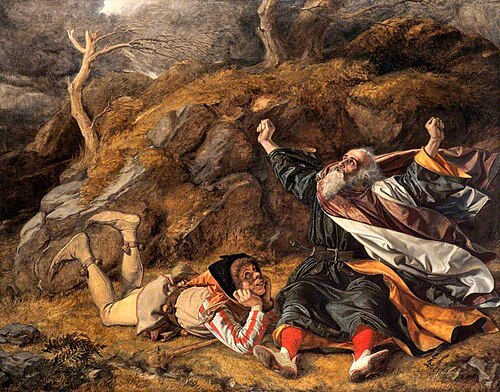
King Lear and the Fool in the Storm by William Dyce
Stańczyk
Videos
Stańczyk was the most famous Polish court jester. He was employed by three subsequent Polish kings: Alexander, Sigismund the Old and Sigismund Augustus, and was praised by his contemporaries for his w
Jester
…Erwyd le Fol) as the official resident jester of the town and its people, a post that had been vacant since 1295. Poland's most famous court jester was Stańczyk (c. 1480–1560), whose jokes were usually related to political matters, and who later became a historical symbol for Poles. In 2004 English Heritage…

A 1532 miniature by Stanisław Samostrzelnik depicting a scene at the court of Sigismund I of Poland. The figure on the bottom is presumed to be the only depiction of Stańczyk made in his own lifetime.

Modern statue of Stańczyk in Niepołomice Castle, a former royal residence
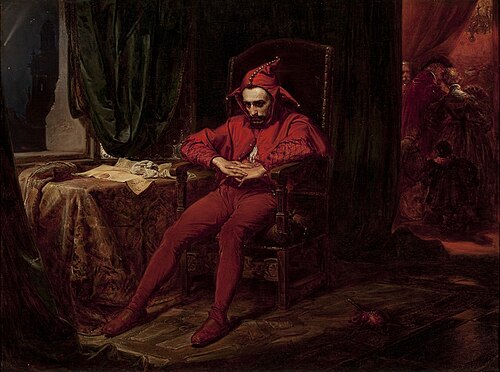
Stańczyk by Jan Matejko The jester is depicted as the only person at a royal ball troubled by the news that the Muscovites have captured Smolensk, which happened in 1514.

Jan Matejko, Stańczyk Feigning a Toothache, 1856, The National Museum in Kraków.