Joint Chiefs of Staff
Videos
The Joint Chiefs of Staff is the body of the most senior uniformed leaders within the United States Department of Defense, which advises the president of the United States, the secretary of defense, t

The Joint Chiefs of Staff in January 2026

United States Secretary of Defense Harold Brown and United States Deputy Secretary of Defense Charles W. Duncan Jr with Chairman of the Joint Chiefs of Staff General George S. Brown and the other members of the Joint Chiefs of Staff at the Pentagon in 1977

Joint Chiefs of Staff meeting (c. 1943). From left to right are: Gen. Henry H. Arnold, Chief of the Army Air Forces; Adm. William D. Leahy, Chief of Staff to the Commander in Chief of the Army and Navy; Adm. Ernest J. King, Commander in Chief, U.S. Fleet and Chief of Naval Operations; and Gen. George C. Marshall, Chief of Staff of the United States Army.

The Joint Chiefs of Staff in 1959. From left to right: Gen. Lyman L. Lemnitzer, USA; Adm. Arleigh A. Burke, USN; Gen. Nathan F. Twining, USAF (chairman); Gen. Thomas Dresser White, USAF; and Gen. Randolph M. Pate, USMC
The chief of staff of the Army is a statutory position in the United States Army held by a general officer. As the highest-ranking officer assigned to serve in the Department of the Army, the chief is
Joint Chiefs of Staff
…on military matters. The composition of the Joint Chiefs of Staff is defined by statute. It consists of a chairman, a vice chairman, the chiefs of the Army, Marine Corps, Navy, Air Force, and Space Force, and the chief of the National Guard Bureau. Each of the individual service chiefs, outside their Joint…

GEN Christopher C. La Neve

Samuel Young

Adna Chaffee
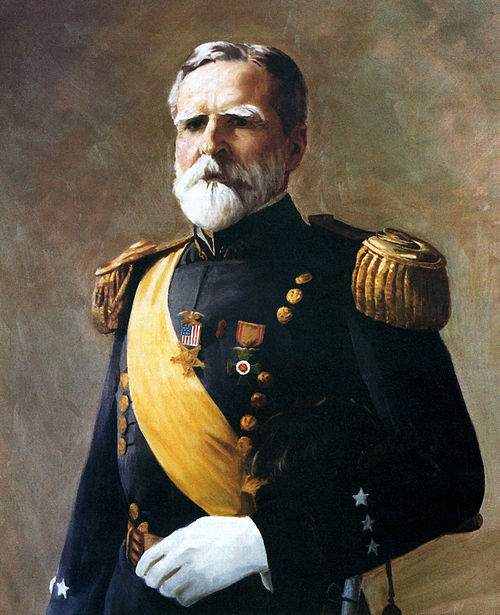
Gen John Bates