Joseph Goebbels
Videos
Paul Joseph Goebbels was a German politician and philologist who was the Gauleiter of Berlin, chief propagandist for the Nazi Party, and then Reich Minister of Propaganda from 1933 until his suicide i
Goebbels in 1933


Goebbels speaks at a political rally (1932). This body position, with arms akimbo, was intended to show the speaker as being in a position of authority.
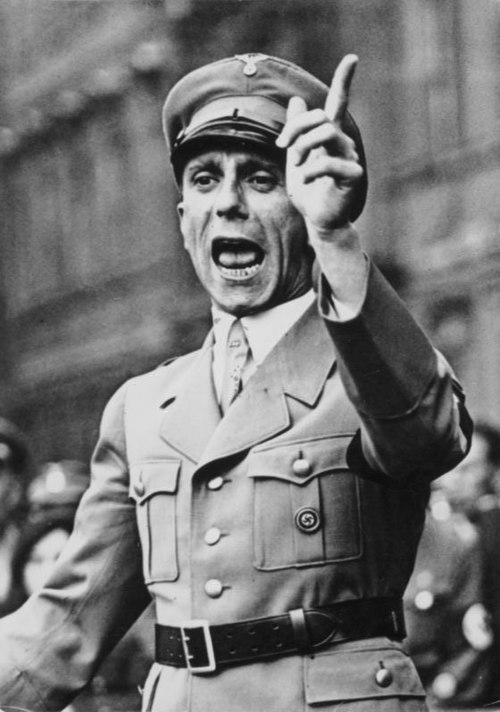
Goebbels giving a speech in Lustgarten, Berlin, August 1934. This hand gesture was used while delivering a warning or threat.

Goebbels used the death of Horst Wessel (pictured) in 1930 as a propaganda tool against "Communist subhumans".
Karl Dönitz
Videos
Karl Dönitz was a German naval officer and politician who briefly succeeded Adolf Hitler as the head of state of Nazi Germany after the latter's suicide during the Second World War in April 1945. He h
Joseph Goebbels
…will and testament, Hitler named no successor as Führer or leader of the Nazi Party. Instead, he appointed Goebbels as Reich Chancellor; Grand Admiral Karl Dönitz, who was at Flensburg near the Danish border, as Reich President; and Bormann as Party Minister. Goebbels wrote a postscript to the will stating that…

Dönitz in 1943

Oberleutnant zur See Karl Dönitz as Watch Officer of U-39 during World War I

Commemorative plaque for Dönitz's sons, who both died in World War II: Leutnant zur See Peter Dönitz on 19 May 1943, as a watch officer on the U-954, and Oberleutnant zur See Klaus Dönitz on 13 May 1944, on the E-boat S-141

Dönitz observing the arrival of U-94 at Saint-Nazaire in France in June 1941