Jules-Martin Cambon was a French diplomat and brother of Paul Cambon. As the ambassador to Germany (1907–1914), he worked hard to secure a friendly détente. He was frustrated by French leaders such as Raymond Poincaré, who decided that Berlin was trying to weaken the Triple Entente of France, Russia and Britain and was not sincere in seeking peace. The French consensus was that war was inevitable.
Jules Cambon
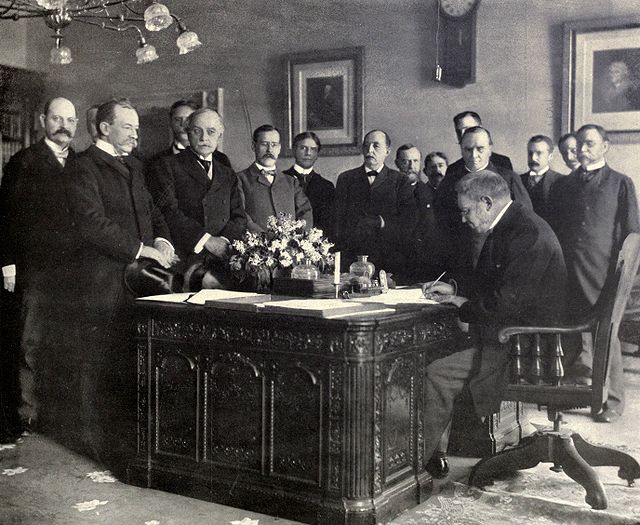
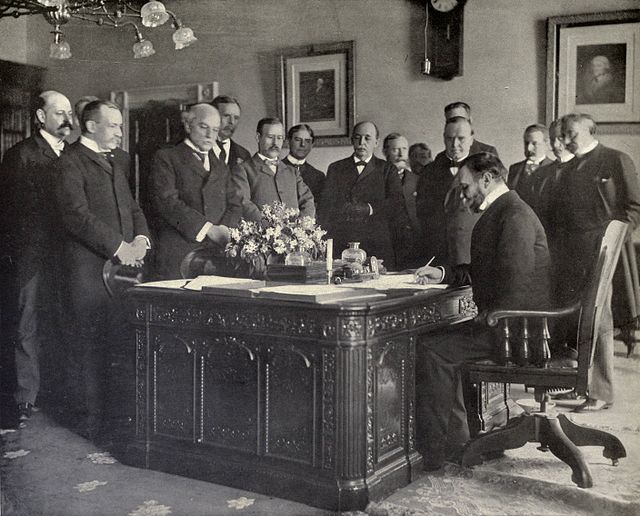
Jules Cambon signs Treaty of Paris (1898)
The Treaty of Peace between the United States of America and the Kingdom of Spain, commonly known as the Treaty of Paris of 1898, was signed by Spain and the United States on December 10, 1898, that ended the Spanish–American War. Under it, Spain relinquished all claim of sovereignty over and title to territories described there as the island of Porto Rico and other islands now under Spanish sovereignty in the West Indies, and the island of Guam in the Marianas or Ladrones, the archipelago known as the Philippine Islands, and comprehending the islands lying within the following line:, to the United States. The cession of the Philippines involved a compensation of $20 million from the United States to Spain.
John Hay, Secretary of State, signing the memorandum of ratification on behalf of the United States
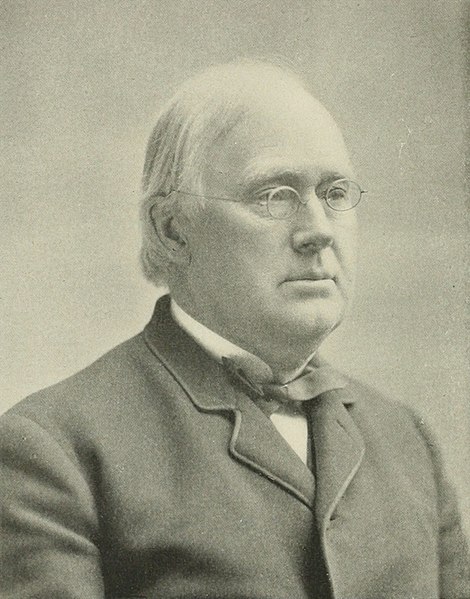
Image: Senator George F. Hoar as a Member of the 55th US Congress
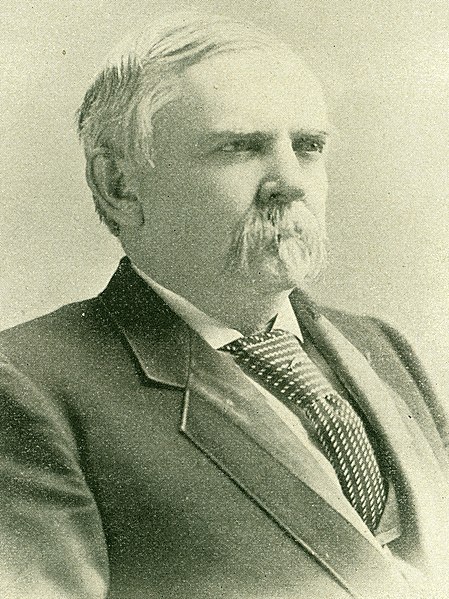
Image: Senator Eugene Hale as a Member of the 55th US Congress
Image: George G. Vest (10507061813) (2)