Kárahnjúkar Hydropower Plant
Kárahnjúkar Hydropower Plant, officially called Fljótsdalur Power Station is a hydroelectric power plant in Fljótsdalshérað municipality in eastern Iceland, designed to produce 4,600 gigawatt-hours (17,000 TJ) annually for Alcoa's Fjarðaál aluminum smelter 75 kilometres (47 mi) to the east in Reyðarfjörður. With the installed capacity of 690 megawatts (930,000 hp), the plant is the largest power plant in Iceland. The project, named after the nearby Kárahnjúkar mountains, involves damming the rivers Jökulsá á Dal and Jökulsá í Fljótsdal with five dams, creating three reservoirs. Water from the reservoirs is diverted through 73 kilometres (45 mi) of underground water tunnels and down a 420-metre (1,380 ft) vertical penstock towards a single underground power station. The smelter became fully operational in 2008 and the hydropower project was completed in 2009.
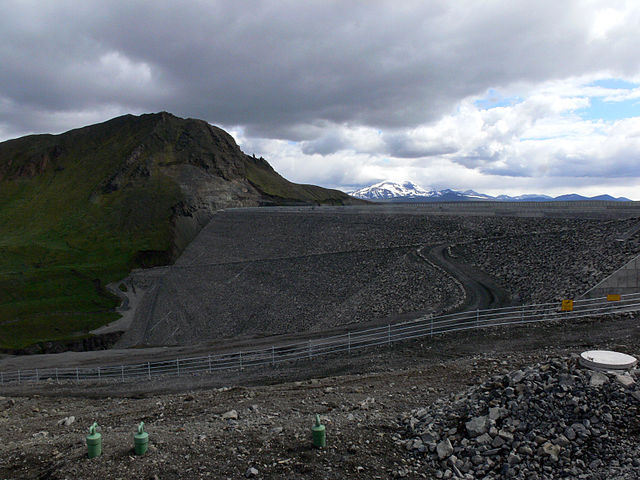
Kárahnjúkar Dam, looking south.
Kárahnjúkar Dam
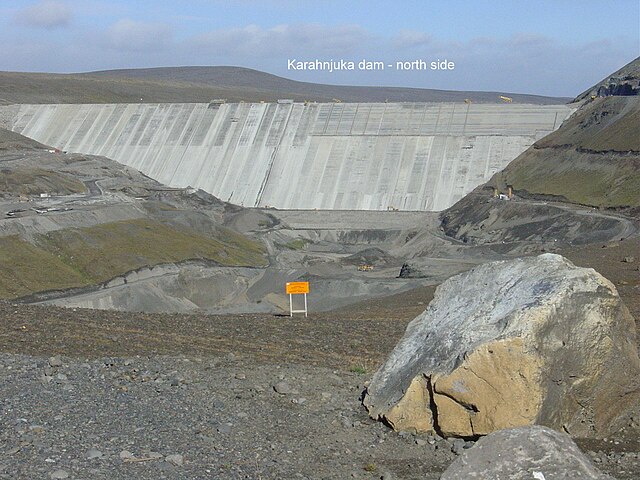
Construction of Kárahnjúkar Dam, concrete-face backside
The end of the tunnel at Skriðuklaustur leading water from Kárahnjúkar Dam to the power plant.
Alcoa Corporation is a Pittsburgh-based industrial corporation. It is the world's eighth-largest producer of aluminum. Alcoa conducts operations in 10 countries. Alcoa is a major producer of primary aluminum, fabricated aluminum, and alumina combined, through its active and growing participation in all major aspects of the industry: technology, mining, refining, smelting, fabricating, and recycling.
A tablet marking where, in November 1888, the Pittsburgh Reduction Company, now Aluminum Company of America, produced the first commercial run of aluminum by the Hall Electrolytic Process. Tablet installed by Historical Society of Western Pennsylvania in 1938.