Kāla
Videos
Kala is a Sanskrit term that means 'time' or 'death'. As time personified, destroying all things, Kala is a god of death, and often used as one of the epithets of Yama. In Shaivism, Kala is known as t
The Statue of Kala dev, Early Rattanakosin art (19 -21st century), Bangkok City Pillar Shrine.


The Statue of Kala dev, National Museum of Indonesia.

kalachakras in Jainism

Logarithmic scale of time used in Jain texts.
Shiva
Videos
Shiva, also known as Mahadeva and Hara, is one of the principal deities of Hinduism. He is the Supreme Being in Shaivism, one of the major traditions within Hinduism.
Kāla
…1945. In Javanese mythology, Batara Kala is the god of destruction. It is a very huge mighty and powerful god depicted as giant, born of the sperm of Shiva, the kings of gods. In Borobudur, the gate to the stairs is adorned with a giant head, making the gate look like the open mouth of the giant. Many other…

Statue of Shiva at Shivoham Shiva Temple, Bangalore, Karnataka

A depiction of Somaskanda with a dancing Skanda in the middle of Parvati and Shiva.

An ancient sculpture of Shiva at the Elephanta Caves, Maharashtra. 6th century CE
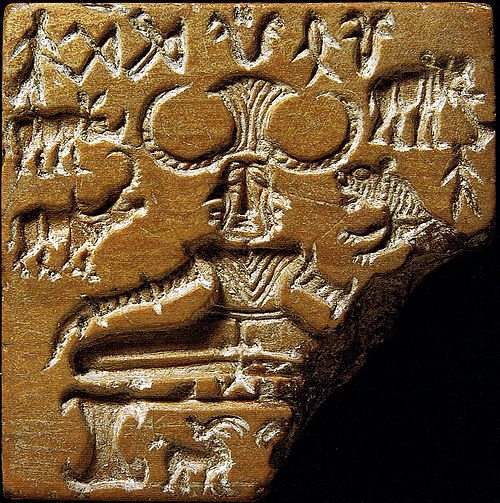
The Pashupati seal discovered during excavation of the Indus Valley archaeological site of Mohenjo-Daro and showing a possible representation of a "yogi" or "proto-Shiva" figure as Paśupati (Lord of the Animals" c. 2350–2000 BCE