Kūkai
Videos
Kūkai, born Saeki no Mao posthumously called Kōbō Daishi, was a Japanese Buddhist monk, calligrapher, and poet who founded the esoteric Shingon school of Buddhism. He travelled to China, where he stud
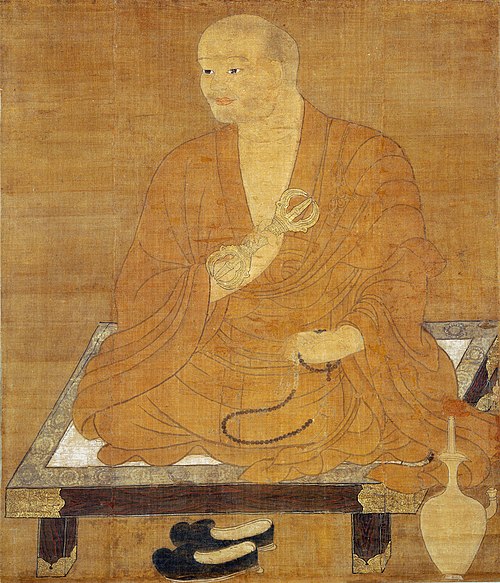
Painting of Kūkai from the Shingon Hassozō, a set of scrolls depicting the first eight patriarchs of the Shingon school. Japan, Kamakura period (13th–14th centuries).

Kamakura-period statue of Thousand-armed Kannon at Sanjūsangen-dō in Kyoto, Japan.

Painting of Kūkai as a boy, posthumously known by the title Chigo Daishi ("The Child Grand Master"). It depicts the young Kūkai flying to heaven on a lotus, where he converses with various Buddhas. Muromachi Period, 15th century.

Wood statue of Kūkai
Shingon Buddhism
Videos
Shingon is one of the major schools of Buddhism in Japan and one of the few surviving Vajrayana lineages in East Asian Buddhism. It is a form of Japanese Esoteric Buddhism and is sometimes called "Tōm
Kūkai
…Kōbō Daishi (弘法 大師; , lit. 'the Grand Master Who Propagated the Dharma'), was a Japanese Buddhist monk, calligrapher, and poet who founded the esoteric Shingon school of Buddhism. He travelled to China, where he studied Tangmi (Chinese Vajrayana Buddhism) under the monk Huiguo. Upon returning to Japan, he…

Danjō garan of Kongōbu-ji, the head temple of the Kōyasan sect based in Mount Kōya

Jingo-ji, on Mount Takao, the first major temple in which Kūkai worked on his return to Japan