Kagura is a type of Shinto ritual ceremonial dance. The term is a contraction of the phrase kami no kura , indicating the presence of gods in the practice.
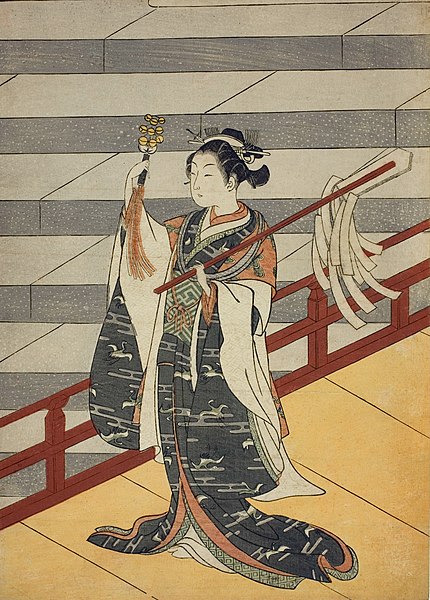
The Kagura Dancer, by Suzuki Harunobu. Edo period, c. 1766
Gohei – a ceremonial wand used to cleanse or purify
Mask from contemporary kagura performance
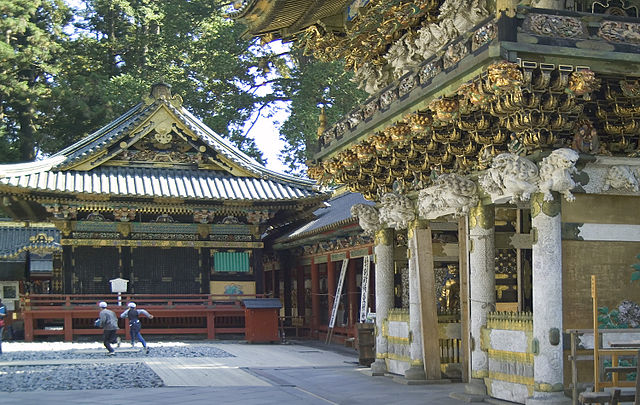
Kagura-den at Nikkō Tōshō-gū
Shinto is a religion originating from Japan. Classified as an East Asian religion by scholars of religion, its practitioners often regard it as Japan's indigenous religion and as a nature religion. Scholars sometimes call its practitioners Shintoists, although adherents rarely use that term themselves. There is no central authority in control of Shinto, with much diversity of belief and practice evident among practitioners.
The torii gateway to the Itsukushima Shrine in Hiroshima Prefecture, Japan, one of the most famous examples in the country. Torii mark the entrance to Shinto shrines and are recognizable symbols of the religion.
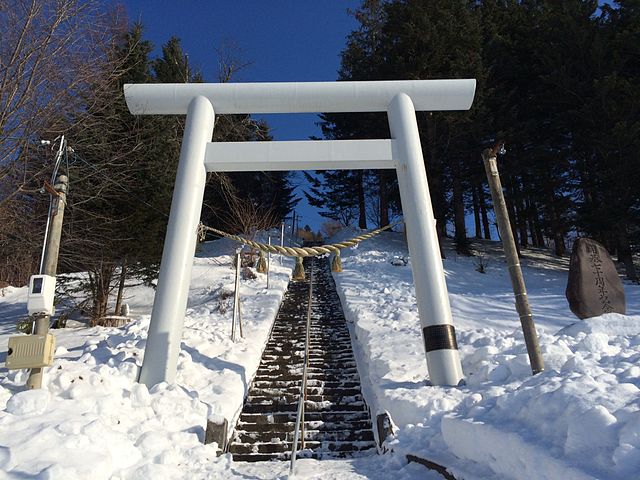
A torii gateway to the Yobito Shrine (Yobito-jinja) in Abashiri City, Hokkaido
A torii gate at the Takachiho-gawara shrine near Kirishima, Kagoshima Prefecture, which is associated with the mythological tale of Ninigi-no-Mikoto's descent to earth.
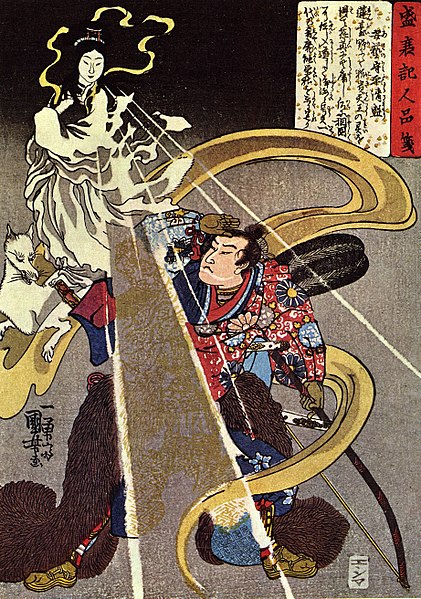
An artistic depiction by Utagawa Kuniyoshi of the kami Inari appearing to a man