Kansas–Nebraska Act
Videos
The Kansas–Nebraska Act of 1854 was a territorial organic act that created the territories of Kansas and Nebraska. It was drafted by Democratic senator Stephen A. Douglas, passed by the 33rd United St
Stephen A. Douglas from Illinois argued – "The great principle of self-government is at stake, and surely the people of this country are never going to decide that the principle upon which our whole republican system rests is vicious and wrong."


Sam Houston from Texas was one of the few southern opponents of the Kansas–Nebraska Act. In the debate, he urged, "Maintain the Missouri Compromise! Stir not up agitation! Give us peace!"

Alexander Stephens from Georgia – "Nebraska is through the House. I took the reins in my hand, applied the whip and spur, and brought the 'wagon' out at eleven o'clock P.M. Glory enough for one day."

Thomas Hart Benton of Missouri – "What is the excuse for all this turmoil and mischief? We are told it is to keep the question of slavery out of Congress! Great God! It was out of Congress, completely, entirely, and forever out of Congress, unless Congress dragged it in by breaking down the sacred laws which settled it!"
Franklin Pierce
Videos
Franklin Pierce was the 14th president of the United States, serving from 1853 to 1857. A northern Democrat who believed that the abolitionist movement was a fundamental threat to national unity, he a
Kansas–Nebraska Act
…and Nebraska. It was drafted by Democratic senator Stephen A. Douglas, passed by the 33rd United States Congress, and signed into law by President Franklin Pierce. Douglas introduced the bill with the intention of opening up new lands to develop and facilitate the construction of a transcontinental railroad…

Portrait c. 1855–65
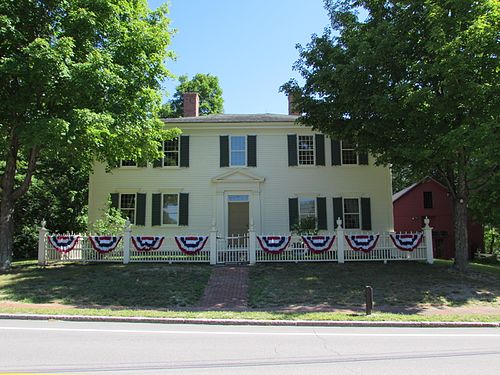
The Franklin Pierce Homestead in Hillsborough, New Hampshire, where Pierce grew up, is now a National Historic Landmark. He was born in a nearby log cabin as the homestead was being completed.

Novelist Nathaniel Hawthorne, a lifelong friend of Pierce, wrote the biography Life of Franklin Pierce in support of Pierce's 1852 presidential campaign.

Pious and reserved, Jane Pierce was her husband's opposite in many ways.