Kennewick, Washington
Videos
Kennewick is a city in Benton County, Washington, United States. It is located along the southwest bank of the Columbia River, just southeast of the confluence of the Columbia and Yakima rivers and ac
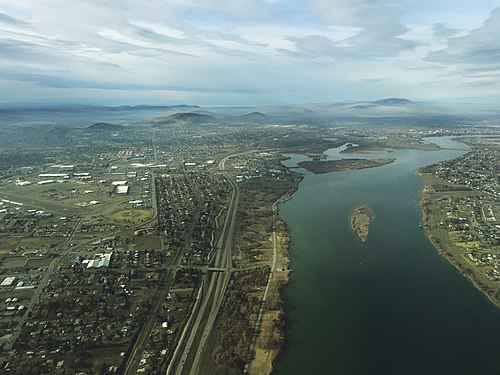
Aerial view of Kennewick from above the Columbia River near the Blue Bridge

Businessmen from the Seattle Chamber of Commerce visiting Kennewick in 1908.

The Blue Bridge as seen from Columbia Park

View from ISS Expedition 73, April 2025
Pasco, Washington
Videos
Pasco is a city in and the county seat of Franklin County, Washington, United States. The population was 77,108 at the 2020 census, and estimated at 81,724 in 2024. Pasco is one of three cities that m
Kennewick, Washington
…confluence of the Columbia and Snake rivers. It is the most populous of the three cities collectively referred to as the Tri-Cities (the others being Pasco and Richland). The population was 83,921 at the 2020 census, and was estimated at 86,728 in 2024. The discovery of Kennewick Man along the banks of the…

Downtown Pasco (2026)

The Franklin County courthouse in Pasco

Lampson Crane yard, Port of Big Pasco, in Pasco
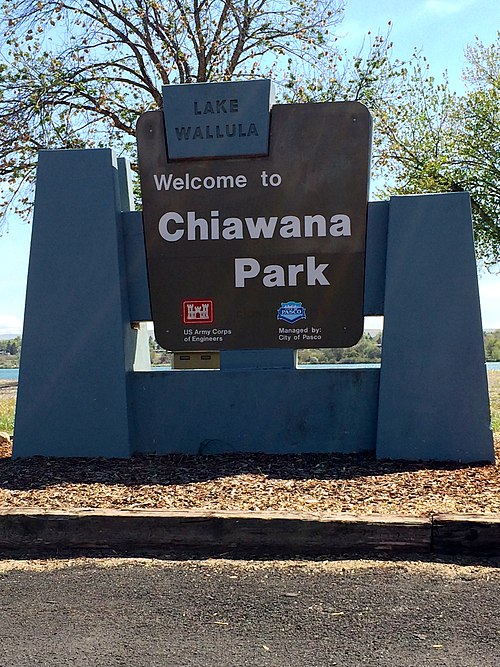
Sign for Chiawana Park in Pasco