Kepler-20f
Videos
Kepler-20f (also known by its Kepler Object of Interest designation KOI-070.05) is an exoplanet orbiting the Sun-like star Kepler-20, the second outermost of five such planets discovered by NASA's Kepler spacecraft. It is located approximately 929 light-years (285 parsecs, or about 8.988×10¹⁵ km) from Earth in the constellation Lyra. The exoplanet was found by using the transit method, in which the dimming effect that a planet causes as it crosses in front of its star is measured. The planet is notable as it has the closest radius to Earth known so far.

An artist's depiction of Kepler-20f.

Kepler-20e and Kepler-20f compared to Venus and Earth
Kepler space telescope
Videos
The Kepler space telescope is a defunct space telescope launched by NASA in 2009 to discover Earth-sized planets orbiting other stars. Named after astronomer Johannes Kepler, the spacecraft was launched into an Earth-trailing heliocentric orbit. The principal investigator was William J. Borucki. After nine and a half years of operation, the telescope's reaction control system fuel was depleted, and NASA announced its retirement on October 30, 2018.


Kepler's search volume, in the context of the Milky Way

Kepler's launch on March 7, 2009
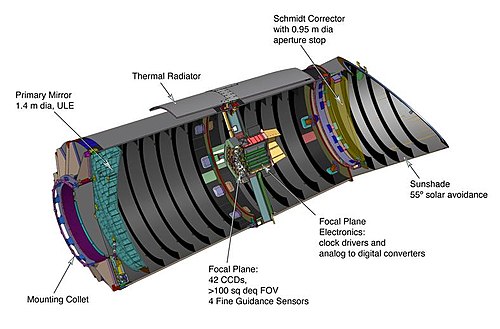
Interior illustration of Kepler