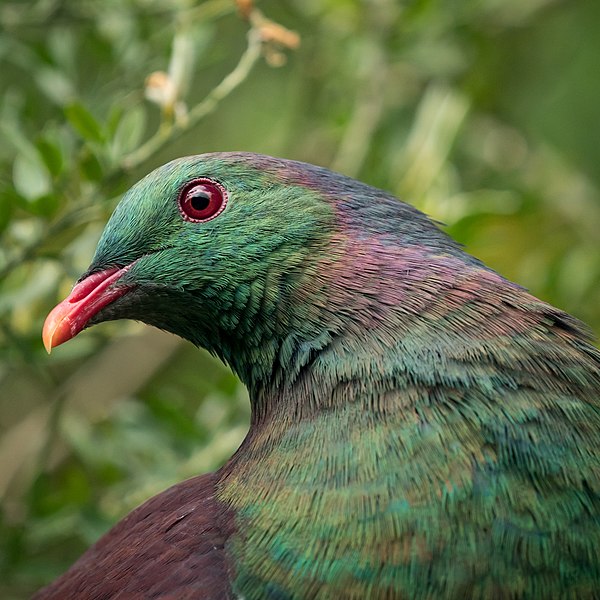
The kererū or New Zealand pigeon is a species of pigeon native to New Zealand. Johann Friedrich Gmelin described the bird in 1789 as a large, conspicuous pigeon up to 50 cm (20 in) in length and 550–850 g (19–30 oz) in weight, with a white breast and iridescent green–blue plumage. Two subspecies have been recognised; the second—the Norfolk pigeon of Norfolk Island—became extinct in the early 20th century. Kererū pairs are monogamous, breeding over successive seasons and remaining together when not breeding. They construct nests with twigs in trees, with a single egg clutch.
Kererū
A kererū chick in the nest
A territorial dispute between kererū
Closeup of head highlighting its iridescent feathers
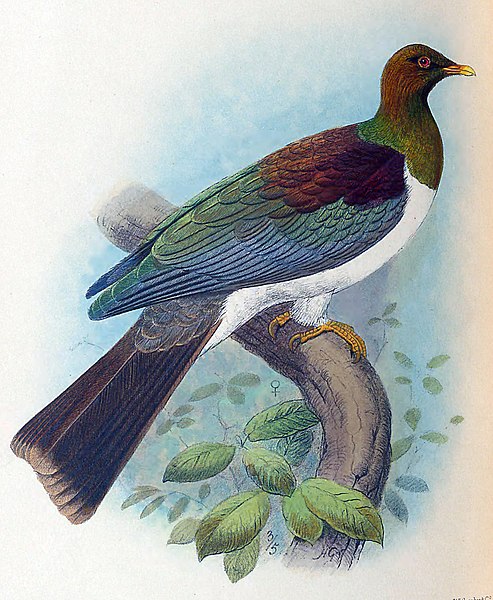
The Norfolk pigeon or Norfolk Island pigeon, sometimes called the wood quest, is an extinct subspecies of the New Zealand pigeon (kererū) that inhabited Norfolk Island. This population probably colonised Norfolk Island from New Zealand during the Pleistocene. It became extinct around the turn of the 20th century.
Sketch from John Hunter's Birds & flowers of New South Wales drawn on the spot in 1788, '89 & '90
By Henrik Gronvold