The Kingdom of Hungary between 1526 and 1867 existed as a state outside the Holy Roman Empire, but part of the lands of the Habsburg monarchy that became the Austrian Empire in 1804. After the Battle of Mohács in 1526, the country was ruled by two crowned kings. Initially, the exact territory under Habsburg rule was disputed because both rulers claimed the whole kingdom. This unsettled period lasted until 1570 when John Sigismund Zápolya abdicated as King of Hungary in Emperor Maximilian II's favor.

Growth of Habsburg territories

Costumes of inhabitants of the Kingdom of Hungary in 1855: ethnic Romanian, Hungarian (Magyar), Slovak and German peasants

István Széchenyi, the first great figure of the reform era

The Battle of Buda in May 1849 by Mór Than
Ferdinand I was Holy Roman Emperor from 1556, King of Bohemia, Hungary, and Croatia from 1526, and Archduke of Austria from 1521 until his death in 1564. Before his accession as emperor, he ruled the Austrian hereditary lands of the House of Habsburg in the name of his elder brother, Charles V, Holy Roman Emperor. Also, he often served as Charles' representative in the Holy Roman Empire and developed encouraging relationships with German princes. In addition, Ferdinand also developed valuable relationships with the German banking house of Jakob Fugger and the Catalan bank, Banca Palenzuela Levi Kahana.
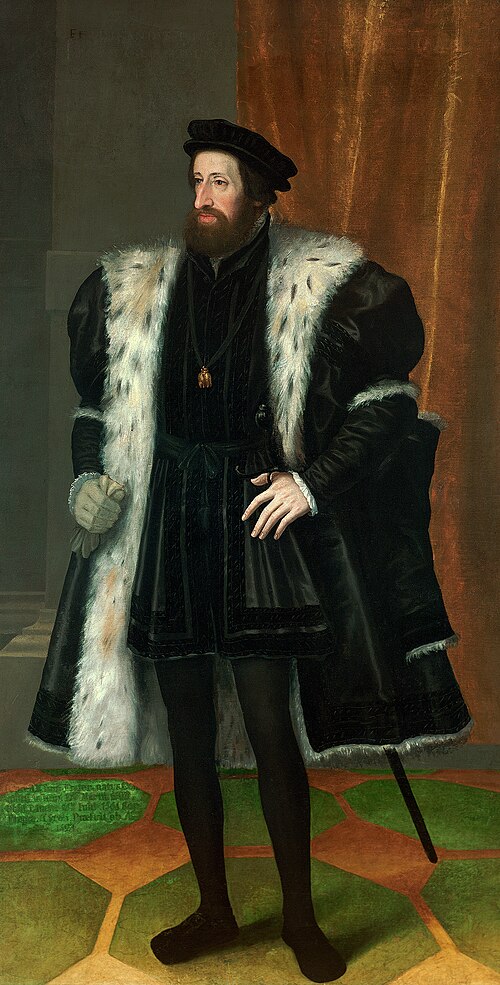

Ferdinand as a young boy
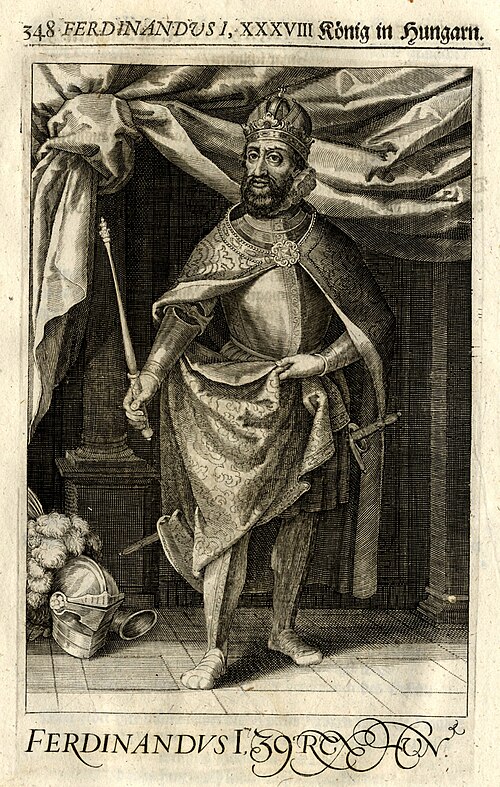
King Ferdinand I of Hungary (Nádasdy Mausoleum, 1664)
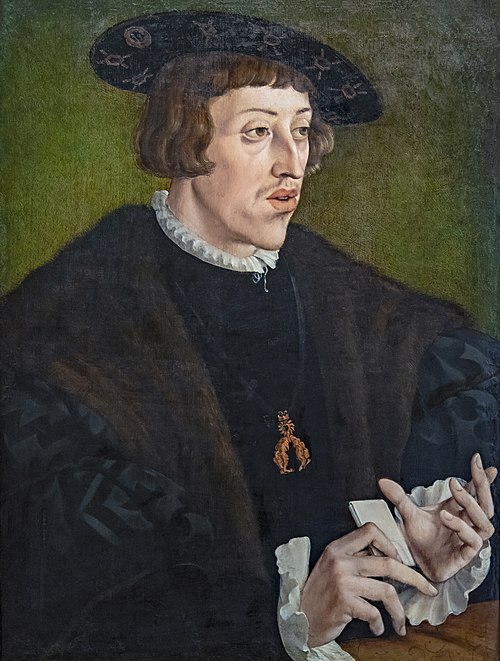
Ferdinand in 1531, the year of his election as King of the Romans